On November 7th, 1917, the Bolsheviks overthrew the short-lived democratic government that had replaced the Tsarist government, putting in place a ragtag, ruthless, disorganized, incompetent, religiously committed but fanatically irreligious Soviet government that nobody thought would last three months, much less 70 years. It lasted far longer than the Thousand Year Reich of the Nazis, who had superior planning and machinery, not to mention far better art direction. In the end it was hard to distinguish the heroic statues promoting the two violently opposed ideologies. The two systems weren't that different in their design and operation. Both kleptocracies, both wonderfully efficient at appropriating property and killing their citizens.
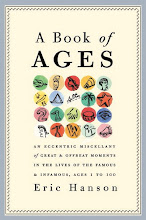
During the Twenties capitalists didn't sleep at night, worrying about the Red Menace, expecting a Revolution to occur here any day. Communism made the Nazis seem far more attractive to people like Henry Ford and Charles Lindbergh and the Duke of Windsor, something I note in A Book of Ages. When the Crash came in 1929 Capitalism appeared doomed. For three years, the Hoover administration waited patiently for the economy to revive itself magically, but it didn't. It turned out that money hidden away by plutocrats was no more useful at stimulating an economy than money stolen by Bolsheviks.
Then on November 8th, 1932, FDR was elected president. He quickly betrayed his fellow patricians and rewrote the rulebook. His regulatory system presided over the best half century the US or any nation ever enjoyed. Until Ronald Reagan arrived and put things back to where they were before. But pure, unopposed capitalism is uninteresting on its own. It doesn't galvanize people. Twenty years after its death, Communism remains the energizing philosophy of an important part of the American political spectrum––not the left, but the right. They love it still. It's why they exist, even when it isn't there.
Showing posts with label Communism. Show all posts
Showing posts with label Communism. Show all posts
Saturday, November 7, 2009

Monday, November 2, 2009
Cheerleading and Unwarranted Optimism
I learned during my random reading this morning that cheerleading was invented 111 years ago today. At the University of Minnesota of all places, which makes me either proud or embarrassed or both. There are no cheerleaders or former cheerleaders in A Book of Ages. George W. Bush's cheerleading career was edited out last fall. W. did have an interesting rollercoaster life, full of cautionary notes and alarming incidents. He might have been an excellent baseball commissioner.
It was on this day in 1967 that Lyndon B. Johnson and his privy counselors decided that Americans should be fed a sugar-coated account of "progress" in the Vietnam War. Cheerleading began almost immediately. The daily briefings began to sound chirpier, more upbeat, like something being written by a chamber of commerce booster or a public relations writer.
The war was a trap Johnson had been caught in. After Truman's experience at the hands of the McCarthyites no Democrat dared step back from a fight, afraid of being labelled "soft on Communism". So in we waded, right up to our necks. Johnson didn't send himself or his wife or daughter to fight and die there, but he did sacrifice his beloved Great Society to avoid losing a war. Vietnam has become a metaphor for avoidable failure and political quagmire, taking the place of the term "albatross" which had been put into service by Samuel Taylor Coleridge in the 1800s.
The unnecessary war is a recurring theme in A Book of Ages, seen through episodes in the lives of LBJ and JFK, Norman Mailer and Gore Vidal and William F. Buckley Jr. who got into fights over it, Daniel Ellsberg, and Richard Nixon who sent his plumbers after Ellsberg, and Bob Woodward who told us about the plumbers, and Henry Kissinger who won a Nobel after washing his hands thoroughly, and Walter Cronkite and one Lieutenant Calley. We see Lieutenant Calleys in every war. A sad business all around, but probably no more rife with cockups than any war, except that it was foolish to begin with. Like Iraq, some say. Which should remind us why we need newspapers and clear eyed journalists, even though they are expensive to send places. They are our eyes and ears.
Tuesday, October 27, 2009
Mao Played by a Tenor
On October 27, 1987, Mao Zedong was played by a tenor wearing a Mao suit in the premier of John Adams’ Nixon In China at the Houston Grand Opera. Mao had been dead for eleven years. Nixon was 74 and still living, but didn't attend, nor did Madame Mao, who was in a Chinese prison for her part in the Cultural Revolution. (The Cultural Revolution, by the way, was not a reenactment of the Italian Renaissance.) The Nixon part was sung by a baritone. My favorite number from the opera is The Chairman Dances. Mao Zedong appears five times in A Book of Ages. Fellow revolutionaries Ho Chi Minh, Fidel Castro, Karl Marx, Vladimir Lenin, Ché Guevara, Malcom X, George Washington, John Adams, Benjamin Franklin, Thomas Jefferson, Robespierre and Jesus of Nazareth also appear several times each.
Thursday, August 20, 2009
Saul Bellow and Leon Trotsky
In August, 1944, Saul Bellow was in Mexico City. On the morning of the 20th he had an appointment with Leon Trotsky, but the communist leader was murdered before the two could meet. Bellow was 25 and hadn't become a conservative libertarian yet.
Subscribe to:
Posts (Atom)

 Posts


