Showing posts with label Harry Truman. Show all posts
Showing posts with label Harry Truman. Show all posts
Monday, April 12, 2010
Truman's Very Bad Day
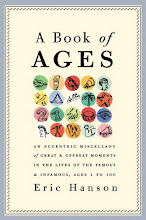
Franklin Roosevelt died suddenly on this day in 1945. He'd been dying for a long time, but nobody wanted to admit it. Losing him was too big a catastrophe to think about. A nondescript man in glasses was quickly sworn in to replace him, but nobody knew much about the guy. He was from somewhere in the Midwest. He wore a panama hat and liked to play the piano. Roosevelt had been president for so long it was hard to remember him not being president. Businessmen hated him, giving him little credit for rescuing the economy. The rich called FDR a traitor to his class. To the working man he was almost God. He was enormously self-confident and reassuring, and he was ubiquitous. People hung his picture in their homes and offices. Everybody knew his voice from the radio. Nobody had ever heard of Harry Truman. When Truman expressed his condolences to Mrs. Roosevelt she said she felt more sorry for him. He was the understudy who wakes up onstage. Everyone was looking at him, waiting for him to act, to say something so they'd know what he sounded like, wondering how quickly he would fail. He was sixty years-old. Harry Truman and Franklin Roosevelt each appear five times in A Book of Ages. Eleanor Roosevelt appears three times.

Thursday, October 29, 2009
The Crash
Eighty years ago this week Wall Street laid an egg. That, at least, was the famous headline in Variety. It began on a Thursday, Black Thursday, October 24th. Thursday was followed by Black Friday. Then Black Monday, when losses set in in earnest. By the time Black Tuesday closed stocks traded on the New York Exchange had lost 17% of their value. And the slide would continue, jigging up and then dropping like a stone into 1931. The lives of millions of Americans changed dramatically. Some knew it immediately. For others the realization would dawn more slowly, like a landscape adjusting to a drought. Even those who survived relatively intact, employed and fed and housed, carried scars from the experience.
Writing this book I developed the habit of looking at people's dates. Looking at anyone's life that began in the few decades before the Crash, rich or poor, famous or not, you can think about 1929 as a pivot point. It's been said that people who purchased stocks in 1929 never saw them recover their value during their lifetime. The Crash, and then the Depression, created several generations characterized by caution and insecurity. But there were still risk takers. Some took chances on new ideas because they had nothing to lose. Ideas were their capital. And ruin was commonplace enough to make failure less stigmatizing. There was less to be cautious with. A generation that had grown up during the Depression was perhaps readier––fatalistically or realistically––to undertake a World War. Perhaps their parents made that war more likely by being afraid to confront it early and boldly.
Great lives have defining moments. FDR arrived at his inauguration prepared to deal with a paralyzing crisis because he had experienced his own in 1921, at age 39, when polio took away the use of his legs. He had the necessary courage and resolution, but it was Eleanor whose eyes and ears told him what was happening on Main Streets and back streets across America. Harry Truman had already experienced the failure of a small business. He'd been there. William F. Buckley Jr. was four years old at the time of the Crash, living in Paris with his family, and had yet to learn English. His family had experienced reverses, mostly because of the revolution in Mexico, though they were hardly paupers. Far from it. Winston Churchill, who visited Wall Street on Black Thursday, lost most of his money and began writing books for a living. He was 55 and considered a failure by most observers. Ninety year-old John D. Rockefeller lost half of his fortune but still had enough left to build Rockefeller Center, found the Museum of Modern Art, restore Colonial Williamsburg and buy enough of Jackson Hole to create a national park. Richard Nixon never forgot being poor and eating ketchup sandwiches for lunch. Lyndon Johnson saw poverty firsthand. He was a 21 year-old school teacher in 1929. F. Scott Fitzgerald's father had lost his business when Scott was a boy. Scott's fiction forever balanced on that razor's edge between euphoria and ruin. In 1929 he was spending much of his income on Zelda's care in private asylums. The Crash informed the films made by Frank Capra and John Ford, the novels written by John Steinbeck and Ralph Ellison, the poems of Langston Hughes, the film performances of Henry Fonda and James Stewart, the songs written by Yip Harburg and Johnny Mercer and sung by Billie Holiday, the music composed by Aaron Copland. References to the Great Depression appear at different points in many lives throughout A Book of Ages. It all began during one late October week eighty years ago.
Writing this book I developed the habit of looking at people's dates. Looking at anyone's life that began in the few decades before the Crash, rich or poor, famous or not, you can think about 1929 as a pivot point. It's been said that people who purchased stocks in 1929 never saw them recover their value during their lifetime. The Crash, and then the Depression, created several generations characterized by caution and insecurity. But there were still risk takers. Some took chances on new ideas because they had nothing to lose. Ideas were their capital. And ruin was commonplace enough to make failure less stigmatizing. There was less to be cautious with. A generation that had grown up during the Depression was perhaps readier––fatalistically or realistically––to undertake a World War. Perhaps their parents made that war more likely by being afraid to confront it early and boldly.
Great lives have defining moments. FDR arrived at his inauguration prepared to deal with a paralyzing crisis because he had experienced his own in 1921, at age 39, when polio took away the use of his legs. He had the necessary courage and resolution, but it was Eleanor whose eyes and ears told him what was happening on Main Streets and back streets across America. Harry Truman had already experienced the failure of a small business. He'd been there. William F. Buckley Jr. was four years old at the time of the Crash, living in Paris with his family, and had yet to learn English. His family had experienced reverses, mostly because of the revolution in Mexico, though they were hardly paupers. Far from it. Winston Churchill, who visited Wall Street on Black Thursday, lost most of his money and began writing books for a living. He was 55 and considered a failure by most observers. Ninety year-old John D. Rockefeller lost half of his fortune but still had enough left to build Rockefeller Center, found the Museum of Modern Art, restore Colonial Williamsburg and buy enough of Jackson Hole to create a national park. Richard Nixon never forgot being poor and eating ketchup sandwiches for lunch. Lyndon Johnson saw poverty firsthand. He was a 21 year-old school teacher in 1929. F. Scott Fitzgerald's father had lost his business when Scott was a boy. Scott's fiction forever balanced on that razor's edge between euphoria and ruin. In 1929 he was spending much of his income on Zelda's care in private asylums. The Crash informed the films made by Frank Capra and John Ford, the novels written by John Steinbeck and Ralph Ellison, the poems of Langston Hughes, the film performances of Henry Fonda and James Stewart, the songs written by Yip Harburg and Johnny Mercer and sung by Billie Holiday, the music composed by Aaron Copland. References to the Great Depression appear at different points in many lives throughout A Book of Ages. It all began during one late October week eighty years ago.
Tuesday, September 1, 2009
The Good War
Seventy years ago today Germany invaded Poland, assuming Britain and France wouldn't care about it any more than they had cared about Czechoslovakia. They did care this time. Neville Chamberlain was soon on his way out and Churchill, that irresponsible war-monger and back-number, was in Number 10 within the year. War would make him the man of the century.
But it's hard to call any war that killed 70 million people a good war. The heroes were heroic, mostly, and the villains were recognizable as monsters. The great novelists and artists of the 20th century set foot in this war. J.D. Salinger and Kurt Vonnegut fought in the Battle of the Bulge. Ernest Hemingway liberated the Ritz Bar in Paris. James Michener wrote some tales about the South Pacific and Rodgers and Hammerstein would make a musical about it. Norman Mailer was a rifleman in that same theater of the war. Graham Greene missed being killed by a German bomb because he was sleeping with his mistress at the time. Evelyn Waugh was an officer so hated by his men that he had to be reassigned for his own protection.
Joseph Heller flew combat missions. So did James Stewart. Afterwards he could no longer play wide eyed innocents. War added a layer of grit and cynicism and suppressed anger to his civilian roles. It was John Wayne, roughly the same age as Stewart, who stayed home to play war heroes on film. Heller's novel distilled war's insanity into a phrase: Catch 22. Vonnegut lived the firebombing of Dresden and wrote a novel around it. Salinger took a bullet out of the war and once everybody was home and safe he put it in the brain of Seymour Glass.
These personalities and their own particular versions of WWII are each included in A Book of Ages, as are Eisenhower and MacArthur and Patton and Roosevelt and Truman and Hirohito and Hitler, the people who made it happen. And Anne Frank, the quiet 14 year-old girl who died at Bergen Belsen.
But it's hard to call any war that killed 70 million people a good war. The heroes were heroic, mostly, and the villains were recognizable as monsters. The great novelists and artists of the 20th century set foot in this war. J.D. Salinger and Kurt Vonnegut fought in the Battle of the Bulge. Ernest Hemingway liberated the Ritz Bar in Paris. James Michener wrote some tales about the South Pacific and Rodgers and Hammerstein would make a musical about it. Norman Mailer was a rifleman in that same theater of the war. Graham Greene missed being killed by a German bomb because he was sleeping with his mistress at the time. Evelyn Waugh was an officer so hated by his men that he had to be reassigned for his own protection.
Joseph Heller flew combat missions. So did James Stewart. Afterwards he could no longer play wide eyed innocents. War added a layer of grit and cynicism and suppressed anger to his civilian roles. It was John Wayne, roughly the same age as Stewart, who stayed home to play war heroes on film. Heller's novel distilled war's insanity into a phrase: Catch 22. Vonnegut lived the firebombing of Dresden and wrote a novel around it. Salinger took a bullet out of the war and once everybody was home and safe he put it in the brain of Seymour Glass.
These personalities and their own particular versions of WWII are each included in A Book of Ages, as are Eisenhower and MacArthur and Patton and Roosevelt and Truman and Hirohito and Hitler, the people who made it happen. And Anne Frank, the quiet 14 year-old girl who died at Bergen Belsen.
Monday, May 25, 2009
Memorial Day
I associate Memorial Day with the small town parade of my childhood. Old men in carefully preserved uniforms. Small flags at the cemetery. It wasn't until I'd grown older that I realized what was on the minds of those old men in uniform. They'd grown old while comrades of theirs had not. What would those other lives have been like if events had turned out differently? Roles reversed. It's the kind of speculation the other bystanders are incapable of. They say crisis pulls all of history into a single moment. I wrote my book as a collection of moments, funny, sad, tragic, heroic and commonplace. Many of them take place in wartime, with lives suddenly put in the balance.
It's hard to visualize J. D. Salinger wading ashore on D-Day or caught up in the Battle of the Bulge, but he was there; the most searing episodes of his fiction were shaped there. Unlike Norman Mailer, Joseph Heller, James Michener or Kurt Vonnegut, Salinger didn't write war stories; the war unfolds for his characters when they have arrived back home. Heller invented a term for the everyday insanity of military protocol: He called it Catch 22. He flew 60 missions as a bomberdier. War takes on a strange abstraction from thousands of feet in the air.
Like Salinger, Vonnegut was on the ground at the Battle of the Bulge. He was captured and shipped to Dresden where he experienced the firebombing of that city, an experience that reappears in his novel Slaughterhouse Five. Norman Mailer and James Michener experienced the war in the Pacific. The soldiers who came home alive read those novels in the backyards of their suburban homes.
One of the greatest war novels every written describes a Civil War that ended six years before the author was born. Stephen Crane wrote the Red Badge of Courage in 1895 when he was 24. 24 year-old J. R. R. Tolkien spent four months of 1916 in the trenches at the Battle of the Somme. Hospitalized, recovering from wounds, he passed the time writing stories about goblins and elves. Ernest Hemingway was an 18 year-old ambulance driver on the Italian Front in 1918, when he received 200 bits of shrapnel rescuing a soldier under fire. A Farewell to Arms would be written a decade later. The intervening period was written in the voice of Nick Adams who says very little about his war experiences. How do you describe such scenes without diminishing them?
War is heroism and foolishness, vast organization characterized by mass inefficiency, enormous effort in an important cause and an enormous waste of time and money, it is the seizing and avoidance of responsibility. When we visualize World War II we often imagine a soldier who looks like John Wayne because he spent so much time in uniform in movies; but he never served. James Stewart was a contemporary of Wayne's when he was flying bomber missions over Europe, age 35, but afterward avoided roles playing soldiers. He'd done that, lived it.
Harry Truman was 34 years-old when he commanded Battery D in the 129th Field Artillery. We have a picture of a man in steel-rimmed glasses and a panama hat; it's hard to imagine him in uniform. At age 60 he had the lives of millions of American soldiers and sailors on his mind when he decided to drop the A-bombs on Japan. There are no easy decisions in wartime. On the evening of June 5, 1944 Dwight Eisenhower went to bed knowing the failure or success of the next day's invasion of France, and the future of the free world, would probably be decided by the weather over the English Channel. Even so, he had a letter in his pocket taking full responsibility for whatever might unfold.
It's hard to visualize J. D. Salinger wading ashore on D-Day or caught up in the Battle of the Bulge, but he was there; the most searing episodes of his fiction were shaped there. Unlike Norman Mailer, Joseph Heller, James Michener or Kurt Vonnegut, Salinger didn't write war stories; the war unfolds for his characters when they have arrived back home. Heller invented a term for the everyday insanity of military protocol: He called it Catch 22. He flew 60 missions as a bomberdier. War takes on a strange abstraction from thousands of feet in the air.
Like Salinger, Vonnegut was on the ground at the Battle of the Bulge. He was captured and shipped to Dresden where he experienced the firebombing of that city, an experience that reappears in his novel Slaughterhouse Five. Norman Mailer and James Michener experienced the war in the Pacific. The soldiers who came home alive read those novels in the backyards of their suburban homes.
One of the greatest war novels every written describes a Civil War that ended six years before the author was born. Stephen Crane wrote the Red Badge of Courage in 1895 when he was 24. 24 year-old J. R. R. Tolkien spent four months of 1916 in the trenches at the Battle of the Somme. Hospitalized, recovering from wounds, he passed the time writing stories about goblins and elves. Ernest Hemingway was an 18 year-old ambulance driver on the Italian Front in 1918, when he received 200 bits of shrapnel rescuing a soldier under fire. A Farewell to Arms would be written a decade later. The intervening period was written in the voice of Nick Adams who says very little about his war experiences. How do you describe such scenes without diminishing them?
War is heroism and foolishness, vast organization characterized by mass inefficiency, enormous effort in an important cause and an enormous waste of time and money, it is the seizing and avoidance of responsibility. When we visualize World War II we often imagine a soldier who looks like John Wayne because he spent so much time in uniform in movies; but he never served. James Stewart was a contemporary of Wayne's when he was flying bomber missions over Europe, age 35, but afterward avoided roles playing soldiers. He'd done that, lived it.
Harry Truman was 34 years-old when he commanded Battery D in the 129th Field Artillery. We have a picture of a man in steel-rimmed glasses and a panama hat; it's hard to imagine him in uniform. At age 60 he had the lives of millions of American soldiers and sailors on his mind when he decided to drop the A-bombs on Japan. There are no easy decisions in wartime. On the evening of June 5, 1944 Dwight Eisenhower went to bed knowing the failure or success of the next day's invasion of France, and the future of the free world, would probably be decided by the weather over the English Channel. Even so, he had a letter in his pocket taking full responsibility for whatever might unfold.
Sunday, April 12, 2009
Jesus of Nazareth and Harry Truman of Missouri
Harry Truman was vice president for 82 days when FDR died on April 12, 1945, making Truman president. Most of America had never heard of the former haberdasher from Missouri. The vice presidency was an obscure post in those days, not worth the proverbial bucket of warm spit. But Truman was no shrinking violet. He'd chaired a senate committee investigating corruption in the defense industry, and had done this while the war was going on, something modern-day patriots would probably call unpatriotic. Truman is the only president who ever dropped the big one. He also uttered the famous line "the buck stops here." Truman anecdotes appear on pages 141, 223, 233, 265 and 281 in A Book of Ages.
Jesus is a difficult figure to pin down in terms of age. He was a minor figure when he died and entirely obscure when he was born, so his dates are rough estimates and vary significantly. Rather than going with the religious accounts I chose the dates arrived at by historians, dates attached to contemporaneous events, but the stories are the ones we know from the New Testament. His remarkable bible knowledge at a young age, the anti-establishment, anti-authoritarian, explicitly liberal sermons, the warnings about what's in store for rich people after they die, the betrayal and his followers' memoirs. Jesus wasn't a shrinking violet either, which makes for good stories. He appears on pages 1, 26,120 and 126 in A Book of Ages.
Jesus is a difficult figure to pin down in terms of age. He was a minor figure when he died and entirely obscure when he was born, so his dates are rough estimates and vary significantly. Rather than going with the religious accounts I chose the dates arrived at by historians, dates attached to contemporaneous events, but the stories are the ones we know from the New Testament. His remarkable bible knowledge at a young age, the anti-establishment, anti-authoritarian, explicitly liberal sermons, the warnings about what's in store for rich people after they die, the betrayal and his followers' memoirs. Jesus wasn't a shrinking violet either, which makes for good stories. He appears on pages 1, 26,120 and 126 in A Book of Ages.
Subscribe to:
Posts (Atom)

 Posts
Posts


