Showing posts with label the Great Depression. Show all posts
Showing posts with label the Great Depression. Show all posts
Monday, April 12, 2010
Truman's Very Bad Day
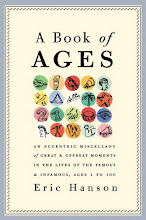
Franklin Roosevelt died suddenly on this day in 1945. He'd been dying for a long time, but nobody wanted to admit it. Losing him was too big a catastrophe to think about. A nondescript man in glasses was quickly sworn in to replace him, but nobody knew much about the guy. He was from somewhere in the Midwest. He wore a panama hat and liked to play the piano. Roosevelt had been president for so long it was hard to remember him not being president. Businessmen hated him, giving him little credit for rescuing the economy. The rich called FDR a traitor to his class. To the working man he was almost God. He was enormously self-confident and reassuring, and he was ubiquitous. People hung his picture in their homes and offices. Everybody knew his voice from the radio. Nobody had ever heard of Harry Truman. When Truman expressed his condolences to Mrs. Roosevelt she said she felt more sorry for him. He was the understudy who wakes up onstage. Everyone was looking at him, waiting for him to act, to say something so they'd know what he sounded like, wondering how quickly he would fail. He was sixty years-old. Harry Truman and Franklin Roosevelt each appear five times in A Book of Ages. Eleanor Roosevelt appears three times.

Saturday, November 7, 2009
The Revolution
On November 7th, 1917, the Bolsheviks overthrew the short-lived democratic government that had replaced the Tsarist government, putting in place a ragtag, ruthless, disorganized, incompetent, religiously committed but fanatically irreligious Soviet government that nobody thought would last three months, much less 70 years. It lasted far longer than the Thousand Year Reich of the Nazis, who had superior planning and machinery, not to mention far better art direction. In the end it was hard to distinguish the heroic statues promoting the two violently opposed ideologies. The two systems weren't that different in their design and operation. Both kleptocracies, both wonderfully efficient at appropriating property and killing their citizens.
During the Twenties capitalists didn't sleep at night, worrying about the Red Menace, expecting a Revolution to occur here any day. Communism made the Nazis seem far more attractive to people like Henry Ford and Charles Lindbergh and the Duke of Windsor, something I note in A Book of Ages. When the Crash came in 1929 Capitalism appeared doomed. For three years, the Hoover administration waited patiently for the economy to revive itself magically, but it didn't. It turned out that money hidden away by plutocrats was no more useful at stimulating an economy than money stolen by Bolsheviks.
Then on November 8th, 1932, FDR was elected president. He quickly betrayed his fellow patricians and rewrote the rulebook. His regulatory system presided over the best half century the US or any nation ever enjoyed. Until Ronald Reagan arrived and put things back to where they were before. But pure, unopposed capitalism is uninteresting on its own. It doesn't galvanize people. Twenty years after its death, Communism remains the energizing philosophy of an important part of the American political spectrum––not the left, but the right. They love it still. It's why they exist, even when it isn't there.
During the Twenties capitalists didn't sleep at night, worrying about the Red Menace, expecting a Revolution to occur here any day. Communism made the Nazis seem far more attractive to people like Henry Ford and Charles Lindbergh and the Duke of Windsor, something I note in A Book of Ages. When the Crash came in 1929 Capitalism appeared doomed. For three years, the Hoover administration waited patiently for the economy to revive itself magically, but it didn't. It turned out that money hidden away by plutocrats was no more useful at stimulating an economy than money stolen by Bolsheviks.
Then on November 8th, 1932, FDR was elected president. He quickly betrayed his fellow patricians and rewrote the rulebook. His regulatory system presided over the best half century the US or any nation ever enjoyed. Until Ronald Reagan arrived and put things back to where they were before. But pure, unopposed capitalism is uninteresting on its own. It doesn't galvanize people. Twenty years after its death, Communism remains the energizing philosophy of an important part of the American political spectrum––not the left, but the right. They love it still. It's why they exist, even when it isn't there.
Tuesday, November 3, 2009
Snapshots
Today is the birthday of the photographer Walker Evans, born in St. Louis in 1903. His father abandoned the family when he was 15, and it was around this time that Walker picked up his first camera. It was a Kodak Brownie. He took it around Toledo, everywhere he went, taking pictures of people unaware, "like a spy" is how he later described it. He spent a year in Paris, thought about being a painter, then settled in New York among the Bohemians. His first published photographs were of the Brooklyn Bridge. They appeared in a 1930 book of poems by Hart Crane. Evans was 27. Most of his photography was of people, though, people sitting on stoops, people working, people sitting on subways who didn't know they were having their picture taken. He took pictures of working men's bedrooms and empty houses.
In 1935 he embarked on a tour of the South, paid for by FDR's Farm Security Administration. Until this time poverty was a private matter, something that wasn't reported in newspapers, wasn't measured, certainly wasn't shown. The photographs appeared in a book accompanied by a text written by James Agee. Let Us Now Praise Famous Men wasn't about famous men at all, but about invisible men––poor men, women and children. Most didn't like having their pictures taken, some were too worn down to protest. Viewers took umbrage, but it brought poverty into the open where people felt obliged to do something about it. For a while anyway. After the Depression was over, poverty went back in the back of the closet. After World War II, Walker Evans spent twenty years taking pictures for Fortune magazine, and he and his wife moved to Connecticut. He appears five times in A Book of Ages.
(Other photographers appear in the book too: Henri Cartier-Bresson, Ansel Adams, Mathew Brady, Louis Lumiére, Alfred Stieglitz, Alberto Korda, Lewis Carroll, Annie Lebowitz, Abraham Zapruder among them.)
In 1935 he embarked on a tour of the South, paid for by FDR's Farm Security Administration. Until this time poverty was a private matter, something that wasn't reported in newspapers, wasn't measured, certainly wasn't shown. The photographs appeared in a book accompanied by a text written by James Agee. Let Us Now Praise Famous Men wasn't about famous men at all, but about invisible men––poor men, women and children. Most didn't like having their pictures taken, some were too worn down to protest. Viewers took umbrage, but it brought poverty into the open where people felt obliged to do something about it. For a while anyway. After the Depression was over, poverty went back in the back of the closet. After World War II, Walker Evans spent twenty years taking pictures for Fortune magazine, and he and his wife moved to Connecticut. He appears five times in A Book of Ages.
(Other photographers appear in the book too: Henri Cartier-Bresson, Ansel Adams, Mathew Brady, Louis Lumiére, Alfred Stieglitz, Alberto Korda, Lewis Carroll, Annie Lebowitz, Abraham Zapruder among them.)
Thursday, October 29, 2009
The Crash
Eighty years ago this week Wall Street laid an egg. That, at least, was the famous headline in Variety. It began on a Thursday, Black Thursday, October 24th. Thursday was followed by Black Friday. Then Black Monday, when losses set in in earnest. By the time Black Tuesday closed stocks traded on the New York Exchange had lost 17% of their value. And the slide would continue, jigging up and then dropping like a stone into 1931. The lives of millions of Americans changed dramatically. Some knew it immediately. For others the realization would dawn more slowly, like a landscape adjusting to a drought. Even those who survived relatively intact, employed and fed and housed, carried scars from the experience.
Writing this book I developed the habit of looking at people's dates. Looking at anyone's life that began in the few decades before the Crash, rich or poor, famous or not, you can think about 1929 as a pivot point. It's been said that people who purchased stocks in 1929 never saw them recover their value during their lifetime. The Crash, and then the Depression, created several generations characterized by caution and insecurity. But there were still risk takers. Some took chances on new ideas because they had nothing to lose. Ideas were their capital. And ruin was commonplace enough to make failure less stigmatizing. There was less to be cautious with. A generation that had grown up during the Depression was perhaps readier––fatalistically or realistically––to undertake a World War. Perhaps their parents made that war more likely by being afraid to confront it early and boldly.
Great lives have defining moments. FDR arrived at his inauguration prepared to deal with a paralyzing crisis because he had experienced his own in 1921, at age 39, when polio took away the use of his legs. He had the necessary courage and resolution, but it was Eleanor whose eyes and ears told him what was happening on Main Streets and back streets across America. Harry Truman had already experienced the failure of a small business. He'd been there. William F. Buckley Jr. was four years old at the time of the Crash, living in Paris with his family, and had yet to learn English. His family had experienced reverses, mostly because of the revolution in Mexico, though they were hardly paupers. Far from it. Winston Churchill, who visited Wall Street on Black Thursday, lost most of his money and began writing books for a living. He was 55 and considered a failure by most observers. Ninety year-old John D. Rockefeller lost half of his fortune but still had enough left to build Rockefeller Center, found the Museum of Modern Art, restore Colonial Williamsburg and buy enough of Jackson Hole to create a national park. Richard Nixon never forgot being poor and eating ketchup sandwiches for lunch. Lyndon Johnson saw poverty firsthand. He was a 21 year-old school teacher in 1929. F. Scott Fitzgerald's father had lost his business when Scott was a boy. Scott's fiction forever balanced on that razor's edge between euphoria and ruin. In 1929 he was spending much of his income on Zelda's care in private asylums. The Crash informed the films made by Frank Capra and John Ford, the novels written by John Steinbeck and Ralph Ellison, the poems of Langston Hughes, the film performances of Henry Fonda and James Stewart, the songs written by Yip Harburg and Johnny Mercer and sung by Billie Holiday, the music composed by Aaron Copland. References to the Great Depression appear at different points in many lives throughout A Book of Ages. It all began during one late October week eighty years ago.
Writing this book I developed the habit of looking at people's dates. Looking at anyone's life that began in the few decades before the Crash, rich or poor, famous or not, you can think about 1929 as a pivot point. It's been said that people who purchased stocks in 1929 never saw them recover their value during their lifetime. The Crash, and then the Depression, created several generations characterized by caution and insecurity. But there were still risk takers. Some took chances on new ideas because they had nothing to lose. Ideas were their capital. And ruin was commonplace enough to make failure less stigmatizing. There was less to be cautious with. A generation that had grown up during the Depression was perhaps readier––fatalistically or realistically––to undertake a World War. Perhaps their parents made that war more likely by being afraid to confront it early and boldly.
Great lives have defining moments. FDR arrived at his inauguration prepared to deal with a paralyzing crisis because he had experienced his own in 1921, at age 39, when polio took away the use of his legs. He had the necessary courage and resolution, but it was Eleanor whose eyes and ears told him what was happening on Main Streets and back streets across America. Harry Truman had already experienced the failure of a small business. He'd been there. William F. Buckley Jr. was four years old at the time of the Crash, living in Paris with his family, and had yet to learn English. His family had experienced reverses, mostly because of the revolution in Mexico, though they were hardly paupers. Far from it. Winston Churchill, who visited Wall Street on Black Thursday, lost most of his money and began writing books for a living. He was 55 and considered a failure by most observers. Ninety year-old John D. Rockefeller lost half of his fortune but still had enough left to build Rockefeller Center, found the Museum of Modern Art, restore Colonial Williamsburg and buy enough of Jackson Hole to create a national park. Richard Nixon never forgot being poor and eating ketchup sandwiches for lunch. Lyndon Johnson saw poverty firsthand. He was a 21 year-old school teacher in 1929. F. Scott Fitzgerald's father had lost his business when Scott was a boy. Scott's fiction forever balanced on that razor's edge between euphoria and ruin. In 1929 he was spending much of his income on Zelda's care in private asylums. The Crash informed the films made by Frank Capra and John Ford, the novels written by John Steinbeck and Ralph Ellison, the poems of Langston Hughes, the film performances of Henry Fonda and James Stewart, the songs written by Yip Harburg and Johnny Mercer and sung by Billie Holiday, the music composed by Aaron Copland. References to the Great Depression appear at different points in many lives throughout A Book of Ages. It all began during one late October week eighty years ago.
Monday, June 22, 2009
Public Enemy
Today is the birthday of John Dillinger, the famous bank robber, born in Indianapolis in 1903. Dillinger was as famous for his daring escapes as he was for robbing banks. In March 1934 he escaped from a heavily guarded jail in Crown Point, Indiana, using a revolver carved out of soap and stealing the sheriff's new Ford automobile. Six months earlier he was sprung from a jail in Ohio by gang members posing as officers of the court. It was during the summer of 1934 that J. Edgar Hoover named him Public Enemy #1.
Because Depression-era Americans resented bankers, Dillinger was perceived as hero, a modern-day Robin Hood. He cultivated this persona by posing for newspaper photographers, but he was no philanthropist. Nor was he self-invented; newspapers and radio glorified him but Hollywood had already created the role of armed antihero. Dillinger represented the shift from folklore to popular media. The way he leapt over teller's windows during robberies was borrowed from gangsters he'd seen in the movies. In July 1934 he was gunned down by G-Men after seeing a gangster movie at Chicago's Biograph Theater. He was 31.
John Dillinger appears three times in A Book of Ages.
Because Depression-era Americans resented bankers, Dillinger was perceived as hero, a modern-day Robin Hood. He cultivated this persona by posing for newspaper photographers, but he was no philanthropist. Nor was he self-invented; newspapers and radio glorified him but Hollywood had already created the role of armed antihero. Dillinger represented the shift from folklore to popular media. The way he leapt over teller's windows during robberies was borrowed from gangsters he'd seen in the movies. In July 1934 he was gunned down by G-Men after seeing a gangster movie at Chicago's Biograph Theater. He was 31.
John Dillinger appears three times in A Book of Ages.
Wednesday, May 27, 2009
The Big Bad Wolf
On this date in 1933 Walt Disney released an animated short featuring three enterprising pigs. Homeowners, if you will. The perils of home ownership and finance were something Americans had become deeply aware of since the onset of the Depression four years earlier. The film is most famous for the song it introduced. "Who's Afraid of the Big Bad Wolf?" expressed a new, almost jaunty, hopefulness. FDR had been in office for 84 days. The wolf might still be at the door but people had a new song to whistle at him.
On the same day in Washington, the new Federal Securities Act was signed into law. One more item in the president's New Deal, it introduced the novel idea of regulating markets. There were now rules that large financial operators, banks, stockbrokers––wolves, if you will––were expected to follow. The American economy has been a less dangerous place in the generations since.
It seems funny to celebrate Walt Disney and Franklin Roosevelt in one breath, but both took the side of the little guy. Disney wasn't always the name on an enormous company. He began as an individual, a small businessman. He arrived in Hollywood penniless. He took enormous risks. He worked very hard and was incredibly talented, but he was lucky and he knew it. He was banking on the luck of his audience too. He chose a mouse for his hero, not a large animal, not a wolf. Disney appears at ages 21, 26, 35, 53 and 63 in A Book of Ages.
Franklin Roosevelt, whom capitalists sneered at and called a "traitor to his class," was born rich, but his ability to understand the fundamental importance of the little guy in the market equation probably saved American capitalism. Remember, this was a time when extremisms of one sort and another were taking over around the globe, in Japan and Germany, Italy and Russia and China. FDR understood that capitalism needs its customers to prosper too.
Roosevelt had never been poor but he understood hardship of another kind. Just as his political star was rising he contracted polio. He was 39, and he would never walk unassisted again. He went to Georgia to convalesce, and it was at Warm Springs that he met people of all classes and types who were in the same boat he was. He was no better and no worse than they were. Their courage helped him find his own. It was at Warm Springs that FDR learned the common touch that helped him––helped America––work its way through the hardest times the country had encountered since the Civil War. Franklin Roosevelt appears at ages 23, 39, 50, 53, 54 and 63 in A Book of Ages.
On the same day in Washington, the new Federal Securities Act was signed into law. One more item in the president's New Deal, it introduced the novel idea of regulating markets. There were now rules that large financial operators, banks, stockbrokers––wolves, if you will––were expected to follow. The American economy has been a less dangerous place in the generations since.
It seems funny to celebrate Walt Disney and Franklin Roosevelt in one breath, but both took the side of the little guy. Disney wasn't always the name on an enormous company. He began as an individual, a small businessman. He arrived in Hollywood penniless. He took enormous risks. He worked very hard and was incredibly talented, but he was lucky and he knew it. He was banking on the luck of his audience too. He chose a mouse for his hero, not a large animal, not a wolf. Disney appears at ages 21, 26, 35, 53 and 63 in A Book of Ages.
Franklin Roosevelt, whom capitalists sneered at and called a "traitor to his class," was born rich, but his ability to understand the fundamental importance of the little guy in the market equation probably saved American capitalism. Remember, this was a time when extremisms of one sort and another were taking over around the globe, in Japan and Germany, Italy and Russia and China. FDR understood that capitalism needs its customers to prosper too.
Roosevelt had never been poor but he understood hardship of another kind. Just as his political star was rising he contracted polio. He was 39, and he would never walk unassisted again. He went to Georgia to convalesce, and it was at Warm Springs that he met people of all classes and types who were in the same boat he was. He was no better and no worse than they were. Their courage helped him find his own. It was at Warm Springs that FDR learned the common touch that helped him––helped America––work its way through the hardest times the country had encountered since the Civil War. Franklin Roosevelt appears at ages 23, 39, 50, 53, 54 and 63 in A Book of Ages.
Subscribe to:
Posts (Atom)

 Posts
Posts


