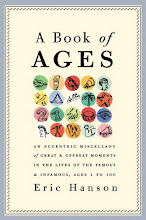
Leafing through A Book of Ages, you begin to realize how many lives were changed by the events of that one day. Courses changed, careers delayed or created, stories rewritten.
Churchill gained an ally and Hitler an enemy. The war in Europe had transformed Churchill from a back number into the indispensable leader, and December 7th made it likelier he would prevail, because FDR suddenly had the ability to act. FDR became a war president. Douglas MacArthur, George Patton and Dwight Eisenhower had a reason to put their boots on. (MacArthur's most recent engagement had been against World War I veterans camped on the Capitol Mall.)
Men at arms were relevant, and thousands of people who never thought of themselves as military men (or women) were put into uniform. Norman Mailer and Gore Vidal and Kurt Vonnegut would write war novels out of the experience. J. D. Salinger's story about a prep school boy named Holden Caulfield was slated to appear in the New Yorker that December. After Pearl Harbor was attacked the editors set it aside for the duration; it suddenly seemed frivolous. Salinger would see action on D-Day and meet Hemingway in Paris, and fight in the Battle of the Bulge. The war would send echoes down through his subsequent work, in characters' disrupted lives and sudden suicides in postwar living rooms.
Hemingway had seen World War I as a teenager; now he was too old to fight, but he outfitted his fishing boat to hunt submarines. In 1944 he single-handedly liberated the Ritz Bar in Paris. Edward R. Murrow became "Edward R. Murrow" reporting on a war that America was half interested in. That too changed. Walter Cronkite cut his journalistic teeth as a war correspondent, and Martha Gellhorn outran most of her male counterparts to get the big story. Her professional rivalry with Hemingway ended their marriage.
Richard Nixon's war was spent playing cards in the Pacific; he won enough from poker to win a seat in Congress. James Michener would write stories about his own experiences in the Pacific, and Rodgers and Hammerstein would make a musical from them. James Stewart enlisted and rose through the ranks to become a bomber pilot over Germany. John Wayne, a near contemporary, made the decision to stay home and play war heroes in movies. Bandleader Glenn Miller lost his life over the English Channel. On FDR's death Harry Truman was transformed from an obscure figure to the most powerful man in the world, burdened with the decision to deploy the atomic bomb. J. Robert Oppenheimer, who marshaled the hundreds of scientists to create that weapon, was dismayed by what he had created. Charles Schulz discovered first-hand how inhuman humanity could be; he would express this cynicism in a comic strip.
The most galvanizing event in American life in the 20th century was triggered by the events of this day 68 years ago on an obscure island in the Pacific. Nobody's life would be the same again.
Showing posts with label Churchill. Show all posts
Showing posts with label Churchill. Show all posts
Monday, December 7, 2009

Thursday, October 29, 2009
The Crash
Eighty years ago this week Wall Street laid an egg. That, at least, was the famous headline in Variety. It began on a Thursday, Black Thursday, October 24th. Thursday was followed by Black Friday. Then Black Monday, when losses set in in earnest. By the time Black Tuesday closed stocks traded on the New York Exchange had lost 17% of their value. And the slide would continue, jigging up and then dropping like a stone into 1931. The lives of millions of Americans changed dramatically. Some knew it immediately. For others the realization would dawn more slowly, like a landscape adjusting to a drought. Even those who survived relatively intact, employed and fed and housed, carried scars from the experience.
Writing this book I developed the habit of looking at people's dates. Looking at anyone's life that began in the few decades before the Crash, rich or poor, famous or not, you can think about 1929 as a pivot point. It's been said that people who purchased stocks in 1929 never saw them recover their value during their lifetime. The Crash, and then the Depression, created several generations characterized by caution and insecurity. But there were still risk takers. Some took chances on new ideas because they had nothing to lose. Ideas were their capital. And ruin was commonplace enough to make failure less stigmatizing. There was less to be cautious with. A generation that had grown up during the Depression was perhaps readier––fatalistically or realistically––to undertake a World War. Perhaps their parents made that war more likely by being afraid to confront it early and boldly.
Great lives have defining moments. FDR arrived at his inauguration prepared to deal with a paralyzing crisis because he had experienced his own in 1921, at age 39, when polio took away the use of his legs. He had the necessary courage and resolution, but it was Eleanor whose eyes and ears told him what was happening on Main Streets and back streets across America. Harry Truman had already experienced the failure of a small business. He'd been there. William F. Buckley Jr. was four years old at the time of the Crash, living in Paris with his family, and had yet to learn English. His family had experienced reverses, mostly because of the revolution in Mexico, though they were hardly paupers. Far from it. Winston Churchill, who visited Wall Street on Black Thursday, lost most of his money and began writing books for a living. He was 55 and considered a failure by most observers. Ninety year-old John D. Rockefeller lost half of his fortune but still had enough left to build Rockefeller Center, found the Museum of Modern Art, restore Colonial Williamsburg and buy enough of Jackson Hole to create a national park. Richard Nixon never forgot being poor and eating ketchup sandwiches for lunch. Lyndon Johnson saw poverty firsthand. He was a 21 year-old school teacher in 1929. F. Scott Fitzgerald's father had lost his business when Scott was a boy. Scott's fiction forever balanced on that razor's edge between euphoria and ruin. In 1929 he was spending much of his income on Zelda's care in private asylums. The Crash informed the films made by Frank Capra and John Ford, the novels written by John Steinbeck and Ralph Ellison, the poems of Langston Hughes, the film performances of Henry Fonda and James Stewart, the songs written by Yip Harburg and Johnny Mercer and sung by Billie Holiday, the music composed by Aaron Copland. References to the Great Depression appear at different points in many lives throughout A Book of Ages. It all began during one late October week eighty years ago.
Writing this book I developed the habit of looking at people's dates. Looking at anyone's life that began in the few decades before the Crash, rich or poor, famous or not, you can think about 1929 as a pivot point. It's been said that people who purchased stocks in 1929 never saw them recover their value during their lifetime. The Crash, and then the Depression, created several generations characterized by caution and insecurity. But there were still risk takers. Some took chances on new ideas because they had nothing to lose. Ideas were their capital. And ruin was commonplace enough to make failure less stigmatizing. There was less to be cautious with. A generation that had grown up during the Depression was perhaps readier––fatalistically or realistically––to undertake a World War. Perhaps their parents made that war more likely by being afraid to confront it early and boldly.
Great lives have defining moments. FDR arrived at his inauguration prepared to deal with a paralyzing crisis because he had experienced his own in 1921, at age 39, when polio took away the use of his legs. He had the necessary courage and resolution, but it was Eleanor whose eyes and ears told him what was happening on Main Streets and back streets across America. Harry Truman had already experienced the failure of a small business. He'd been there. William F. Buckley Jr. was four years old at the time of the Crash, living in Paris with his family, and had yet to learn English. His family had experienced reverses, mostly because of the revolution in Mexico, though they were hardly paupers. Far from it. Winston Churchill, who visited Wall Street on Black Thursday, lost most of his money and began writing books for a living. He was 55 and considered a failure by most observers. Ninety year-old John D. Rockefeller lost half of his fortune but still had enough left to build Rockefeller Center, found the Museum of Modern Art, restore Colonial Williamsburg and buy enough of Jackson Hole to create a national park. Richard Nixon never forgot being poor and eating ketchup sandwiches for lunch. Lyndon Johnson saw poverty firsthand. He was a 21 year-old school teacher in 1929. F. Scott Fitzgerald's father had lost his business when Scott was a boy. Scott's fiction forever balanced on that razor's edge between euphoria and ruin. In 1929 he was spending much of his income on Zelda's care in private asylums. The Crash informed the films made by Frank Capra and John Ford, the novels written by John Steinbeck and Ralph Ellison, the poems of Langston Hughes, the film performances of Henry Fonda and James Stewart, the songs written by Yip Harburg and Johnny Mercer and sung by Billie Holiday, the music composed by Aaron Copland. References to the Great Depression appear at different points in many lives throughout A Book of Ages. It all began during one late October week eighty years ago.
Sunday, May 17, 2009
Bulls and Bears
The New York Stock Exchange was formed on this day in 1792. Located on Wall Street, the stock exchange became a place of wild ups and downs, frequent panics and frauds. It remained so until 1934 when FDR formed the S.E.C. Since then the American economy has enjoyed a steady, mildly fluctuating prosperity, with no great panics and only occasional frauds, unless you consider Market Capitalism a fraud. Roosevelt put Joseph Kennedy, one of the greatest of Wall Street's buccaneers, in charge of cleaning the street up. Kennedy did a remarkable job and kept a straight face enforcing the rules that would have prevented him from acquiring his fortune. You could say FDR and Joe Kennedy were mother and father to the American middle class
Left to its own devices, life is a rollercoaster, and A Book of Ages reads like one. Mark Twain, Winston Churchill, Thomas Paine, Ulysses S. Grant, Alfred Nobel, F. Scott Fitzgerald, Mary McCarthy, Buckminster Fuller, Charles Dickens, Georg Friderich Handel, and Philo T. Farnsworth (the man who invented television) all experienced bankruptcy firsthand. Churchill lost everything in the Crash of '29 and had to write his way back to properity. John D. Rockefeller lost half of his fortune in 1929, but he still had enough left over to restore colonial Williamsburg, create Grand Teton National Park, build Rockefeller Center and found the Museum of Modern Art. Being rich insulates you from life's troubles. John Steinbeck wrote about the other 99% of us in The Grapes of Wrath, which I also mention. I sometimes think a book is a better monument.
“The world is the house of the strong. I shall not know until the end what I have lost or won in this place, in this vast gambling den where I have spent more than sixty years, dicebox in hand, shaking the dice.” Denis Diderot, Elements of Physiology (1774-1780)
Left to its own devices, life is a rollercoaster, and A Book of Ages reads like one. Mark Twain, Winston Churchill, Thomas Paine, Ulysses S. Grant, Alfred Nobel, F. Scott Fitzgerald, Mary McCarthy, Buckminster Fuller, Charles Dickens, Georg Friderich Handel, and Philo T. Farnsworth (the man who invented television) all experienced bankruptcy firsthand. Churchill lost everything in the Crash of '29 and had to write his way back to properity. John D. Rockefeller lost half of his fortune in 1929, but he still had enough left over to restore colonial Williamsburg, create Grand Teton National Park, build Rockefeller Center and found the Museum of Modern Art. Being rich insulates you from life's troubles. John Steinbeck wrote about the other 99% of us in The Grapes of Wrath, which I also mention. I sometimes think a book is a better monument.
“The world is the house of the strong. I shall not know until the end what I have lost or won in this place, in this vast gambling den where I have spent more than sixty years, dicebox in hand, shaking the dice.” Denis Diderot, Elements of Physiology (1774-1780)
Friday, April 24, 2009
Churchill, Trollope, De Kooning
On this day in 1953 Winston Churchill became Sir Winston Churchill when he was knighted by Queen Elizabeth II. He was 78. She was 27 and had been Queen for a little over a year.
Churchill dominated his era by force of personality more than talent, although he had that too. He was a dismal student, but wrote his classmates' school essays for them. His reputation as a heroic soldier might have had something to do with the vivid personal accounts he wrote for newspapers and in books. At one point he was the highest paid journalist in the world. (People forget that he received the Nobel Prize for Literature in 1953 as well as the knighthood.)
Yet he was constantly in debt, hated paying tailor's bills, drank prodigiously, smoked religiously, alternately charmed and insulted his peers, and, until late in his political career, was considered an unreliable hothead, a rogue, a bit of a charlatan, not to be trusted with high office. At age 40, he was fired from his post atop the Admiralty and retired to the country, where he took up painting. All of this came long before May 1940, when he became the hero of the age. Churchill appears on pages 47, 88, 154, 223, 235, 248, 260, 262, 273 and 275 in A Book of Ages.
April 24 is the birthday of the English novelist Anthony Trollope, born in 1815. Methodical, conservative, retiring, discreet, cautious, predictable, but enormously productive. Novels poured from his pen at the constant rate of 250 words every fifteen minutes. He wrote for three hours every day. But he was a spare-time artist. His days were spent behind a desk at the Post Office. In 1855, at age 40 he invented the familiar red pillar-box where the English still deposit their letters. Trollope appears five times in A Book of Ages
It's also the birthday of the abstract expressionist painter Willem de Kooning. After arriving in America as a stowaway, he worked for a time painting houses in Hoboken, New Jersey before joining the art community in Manhattan. De Kooning appears four times in A Book of Ages.
Churchill dominated his era by force of personality more than talent, although he had that too. He was a dismal student, but wrote his classmates' school essays for them. His reputation as a heroic soldier might have had something to do with the vivid personal accounts he wrote for newspapers and in books. At one point he was the highest paid journalist in the world. (People forget that he received the Nobel Prize for Literature in 1953 as well as the knighthood.)
Yet he was constantly in debt, hated paying tailor's bills, drank prodigiously, smoked religiously, alternately charmed and insulted his peers, and, until late in his political career, was considered an unreliable hothead, a rogue, a bit of a charlatan, not to be trusted with high office. At age 40, he was fired from his post atop the Admiralty and retired to the country, where he took up painting. All of this came long before May 1940, when he became the hero of the age. Churchill appears on pages 47, 88, 154, 223, 235, 248, 260, 262, 273 and 275 in A Book of Ages.
April 24 is the birthday of the English novelist Anthony Trollope, born in 1815. Methodical, conservative, retiring, discreet, cautious, predictable, but enormously productive. Novels poured from his pen at the constant rate of 250 words every fifteen minutes. He wrote for three hours every day. But he was a spare-time artist. His days were spent behind a desk at the Post Office. In 1855, at age 40 he invented the familiar red pillar-box where the English still deposit their letters. Trollope appears five times in A Book of Ages
It's also the birthday of the abstract expressionist painter Willem de Kooning. After arriving in America as a stowaway, he worked for a time painting houses in Hoboken, New Jersey before joining the art community in Manhattan. De Kooning appears four times in A Book of Ages.
Sunday, April 5, 2009
Pocahontas, Churchill, Ginsburg
Pocahontas married John Rolfe on this day in 1614. It was not a fairy tale marriage by all accounts, but by 17th century standards it was fairly typical. She was kidnapped by the settlers of Jamestown. Then, when negotiations broke down, she married one of her captors. She moved to England with him but found it foggy and depressing. She died there in 1617, at age 22. She was the granddaughter of Chief Powhatan and thus the first in a long line of American heiresses married off to English aristocrats. Pocahontas appears on pages 25, 44 and 64 in A Book of Ages.
Winston Churchill's mother, Jennie Jerome, was another one of those American heiresses exported to reinvigorate the English aristocracy. On this date in 1955, Winston Churchill left 10 Downing Street and the Prime Ministership of England for the last time. He won his last election to the House of Commons in 1959, when he was 84. Churchill appears ten times in A Book of Ages.
Beat poet Allen Ginsburg died on this day in 1995. He appears in A Book of Ages at ages 6, 18, 19, 26, and at age 29 when he and Jack Kerouac bum a ride in Lawrence Ferlinghetti's Astin Martin to a gallery at Fillmore and Union in San Francisco, where he opens with the famous line: "I saw the best minds of my generation destroyed by madness..."
Winston Churchill's mother, Jennie Jerome, was another one of those American heiresses exported to reinvigorate the English aristocracy. On this date in 1955, Winston Churchill left 10 Downing Street and the Prime Ministership of England for the last time. He won his last election to the House of Commons in 1959, when he was 84. Churchill appears ten times in A Book of Ages.
Beat poet Allen Ginsburg died on this day in 1995. He appears in A Book of Ages at ages 6, 18, 19, 26, and at age 29 when he and Jack Kerouac bum a ride in Lawrence Ferlinghetti's Astin Martin to a gallery at Fillmore and Union in San Francisco, where he opens with the famous line: "I saw the best minds of my generation destroyed by madness..."
Subscribe to:
Posts (Atom)

 Posts
Posts


