Showing posts with label Nixon. Show all posts
Showing posts with label Nixon. Show all posts
Friday, December 18, 2009
Merry Christmas from Richard Nixon
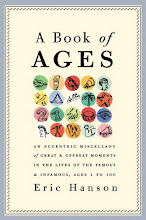
On this day in 1972 President Nixon announced the Christmas bombing of North Vietnamese cities. Nixon appears 12 times in A Book of Ages. That's not counting the times he appears in other people's anecdotes. I'm thinking of Paul Newman discovering he was on the president's enemies list. Nixon spent Christmas 1972 in Florida with his old friend Bebe Rebozo. At the last moment he uninvited loyal acolyte Henry Kissinger who'd planned to join him. Who is invited to whose Christmas party has always been an interesting mark of favor and popularity. As we look back on Christmases past we remember each year by who we were with and how we celebrated, Christmases spent in a war zone far from home or in a balmy climate with friends or stuck in an airport somewhere. When he was 19 George Washington spent Christmas alone, aboard ship returning from Barbados. J. D. Salinger spent his 25th Christmas in deep snow in the Ardennes, fighting the Battle of the Bulge.

Monday, December 7, 2009
A Day That Will Live In Infamy
Leafing through A Book of Ages, you begin to realize how many lives were changed by the events of that one day. Courses changed, careers delayed or created, stories rewritten.
Churchill gained an ally and Hitler an enemy. The war in Europe had transformed Churchill from a back number into the indispensable leader, and December 7th made it likelier he would prevail, because FDR suddenly had the ability to act. FDR became a war president. Douglas MacArthur, George Patton and Dwight Eisenhower had a reason to put their boots on. (MacArthur's most recent engagement had been against World War I veterans camped on the Capitol Mall.)
Men at arms were relevant, and thousands of people who never thought of themselves as military men (or women) were put into uniform. Norman Mailer and Gore Vidal and Kurt Vonnegut would write war novels out of the experience. J. D. Salinger's story about a prep school boy named Holden Caulfield was slated to appear in the New Yorker that December. After Pearl Harbor was attacked the editors set it aside for the duration; it suddenly seemed frivolous. Salinger would see action on D-Day and meet Hemingway in Paris, and fight in the Battle of the Bulge. The war would send echoes down through his subsequent work, in characters' disrupted lives and sudden suicides in postwar living rooms.
Hemingway had seen World War I as a teenager; now he was too old to fight, but he outfitted his fishing boat to hunt submarines. In 1944 he single-handedly liberated the Ritz Bar in Paris. Edward R. Murrow became "Edward R. Murrow" reporting on a war that America was half interested in. That too changed. Walter Cronkite cut his journalistic teeth as a war correspondent, and Martha Gellhorn outran most of her male counterparts to get the big story. Her professional rivalry with Hemingway ended their marriage.
Richard Nixon's war was spent playing cards in the Pacific; he won enough from poker to win a seat in Congress. James Michener would write stories about his own experiences in the Pacific, and Rodgers and Hammerstein would make a musical from them. James Stewart enlisted and rose through the ranks to become a bomber pilot over Germany. John Wayne, a near contemporary, made the decision to stay home and play war heroes in movies. Bandleader Glenn Miller lost his life over the English Channel. On FDR's death Harry Truman was transformed from an obscure figure to the most powerful man in the world, burdened with the decision to deploy the atomic bomb. J. Robert Oppenheimer, who marshaled the hundreds of scientists to create that weapon, was dismayed by what he had created. Charles Schulz discovered first-hand how inhuman humanity could be; he would express this cynicism in a comic strip.
The most galvanizing event in American life in the 20th century was triggered by the events of this day 68 years ago on an obscure island in the Pacific. Nobody's life would be the same again.
Churchill gained an ally and Hitler an enemy. The war in Europe had transformed Churchill from a back number into the indispensable leader, and December 7th made it likelier he would prevail, because FDR suddenly had the ability to act. FDR became a war president. Douglas MacArthur, George Patton and Dwight Eisenhower had a reason to put their boots on. (MacArthur's most recent engagement had been against World War I veterans camped on the Capitol Mall.)
Men at arms were relevant, and thousands of people who never thought of themselves as military men (or women) were put into uniform. Norman Mailer and Gore Vidal and Kurt Vonnegut would write war novels out of the experience. J. D. Salinger's story about a prep school boy named Holden Caulfield was slated to appear in the New Yorker that December. After Pearl Harbor was attacked the editors set it aside for the duration; it suddenly seemed frivolous. Salinger would see action on D-Day and meet Hemingway in Paris, and fight in the Battle of the Bulge. The war would send echoes down through his subsequent work, in characters' disrupted lives and sudden suicides in postwar living rooms.
Hemingway had seen World War I as a teenager; now he was too old to fight, but he outfitted his fishing boat to hunt submarines. In 1944 he single-handedly liberated the Ritz Bar in Paris. Edward R. Murrow became "Edward R. Murrow" reporting on a war that America was half interested in. That too changed. Walter Cronkite cut his journalistic teeth as a war correspondent, and Martha Gellhorn outran most of her male counterparts to get the big story. Her professional rivalry with Hemingway ended their marriage.
Richard Nixon's war was spent playing cards in the Pacific; he won enough from poker to win a seat in Congress. James Michener would write stories about his own experiences in the Pacific, and Rodgers and Hammerstein would make a musical from them. James Stewart enlisted and rose through the ranks to become a bomber pilot over Germany. John Wayne, a near contemporary, made the decision to stay home and play war heroes in movies. Bandleader Glenn Miller lost his life over the English Channel. On FDR's death Harry Truman was transformed from an obscure figure to the most powerful man in the world, burdened with the decision to deploy the atomic bomb. J. Robert Oppenheimer, who marshaled the hundreds of scientists to create that weapon, was dismayed by what he had created. Charles Schulz discovered first-hand how inhuman humanity could be; he would express this cynicism in a comic strip.
The most galvanizing event in American life in the 20th century was triggered by the events of this day 68 years ago on an obscure island in the Pacific. Nobody's life would be the same again.
Tuesday, November 24, 2009
Ben Franklin, the ideal dinner guest
I read in the paper this morning about a new Ben Franklin exhibit at the Minnesota History Center. Who better to spend an hour or two with over Thanksgiving? (Remember it was Franklin who wanted the turkey to be our national emblem, rather than the ill-behaved bald eagle.)
As I was collecting anecdotes and episodes for A Book of Ages, Franklin was the hardest to keep under control: there were so many stories, and so many begged for elaboration. But B. of A. is an ensemble piece. Each story is told at the right length for retelling in one elevator ride. Franklin appears 13 times, the same number as Freud, three fewer than Einstein, one more than Nixon.
At a dinner table ringed with personalities (which is how the book reads) Franklin is the most surprising, the most voluble. The kite is there (did he actually fly it in a thunderstorm?), the illegitimate son, the meeting with Voltaire in Paris (which many consider the high moment of the Enlightenment), his comment about the first manned flight (asked what good it was, he answered "What good is a newborn baby?"), as well as everyday matters of life and age: his retirement fund, his gout. Also his inventions: bifocals, the fire department, etc. Does anyone remember that Franklin was America's first best-selling author? On that score alone he'd have been an interesting person to know.
One item I edited out of the book (I had to edit out some things): it was Ben Franklin who brought rhubarb to America, in 1772.
As I was collecting anecdotes and episodes for A Book of Ages, Franklin was the hardest to keep under control: there were so many stories, and so many begged for elaboration. But B. of A. is an ensemble piece. Each story is told at the right length for retelling in one elevator ride. Franklin appears 13 times, the same number as Freud, three fewer than Einstein, one more than Nixon.
At a dinner table ringed with personalities (which is how the book reads) Franklin is the most surprising, the most voluble. The kite is there (did he actually fly it in a thunderstorm?), the illegitimate son, the meeting with Voltaire in Paris (which many consider the high moment of the Enlightenment), his comment about the first manned flight (asked what good it was, he answered "What good is a newborn baby?"), as well as everyday matters of life and age: his retirement fund, his gout. Also his inventions: bifocals, the fire department, etc. Does anyone remember that Franklin was America's first best-selling author? On that score alone he'd have been an interesting person to know.
One item I edited out of the book (I had to edit out some things): it was Ben Franklin who brought rhubarb to America, in 1772.
Tuesday, November 17, 2009
"I am not a crook"
It was on this day in 1973 that Richard Nixon qualified for Bartlett's Familiar Quotations. Just five words. Five words everybody knew were not true. "I am not a crook." It happened in Orlando, Florida in front of a few hundred AP editors, which made it hard to retract or clarify. By then he didn't have anybody skilled enough to clarify him out of his situation. He hung on for another ten months. He was 60 years-old.
It's hard to correct the habits of a lifetime. What I remember, watching as a kid from my Republican household, was a kindly, sincere, trustworthy man in a conservative banker's gray or blue suit. His eyes twinkled. He smiled at you right through the television. Behind the facade there was a lot of animal cunning. He was especially good at seeing and exploiting weaknesses in other people. He beat Helen Gahagan Douglas for his Senate seat by suggesting she wore pink underwear. Everybody knew that closet Communists wore pink underwear, but he never offered any eyewitness testimony. He was 37 when he got into the Senate. When he was 30 (the age Hitler was when he grew his famous moustache) Nixon won more than $10,000 off fellow servicemen in the South Pacific. I wonder what that did for morale.
I can still see Nixon's face and hear his voice, coming out of the old Zenith. He seemed so believable, but maybe it was the medium. We believed people we saw on TV. In 1977 the deposed Nixon appeared on TV with David Frost and explained that when a president does something it's not illegal. Nixon appears a dozen times in A Book of Ages. This isn't counting all the times he shows up in other people's stories. Like Kissinger's and Rose Mary Woods', Nixon's loyal, and remarkably elastic, secretary. Nixon's name comes up when Paul Newman finds he's on the president's enemies list, and he comes to mind when William Safire wins a Pulitzer Prize (Safire was a Nixon speechwriter before he became a trusted columnist.)
I'm not changing the subject too much when I mention this. It was on this day in 1970 that Lieutenant William Calley went on trial for his part in the My Lai Massacre. Calley appears twice in A Book of Ages. 102 villagers died in the hamlet of My Lai on March 16, 1968. More than 500 Vietnamese civilians had been killed in similar incidents in that same period. The Courts Martial eventually found Calley guilty of murdering 22 Vietnamese civilians and sentenced him to life imprisonment.
The public reaction was mixed. The day after Calley was sentenced President Nixon ordered him transferred from Leavenworth Prison to house arrest at Fort Benning, Georgia. In the end he only served 3 1/2 years of his sentence. After his release Calley managed to lead a fairly normal life. He worked in a jewelry store. He got a divorce. In August of this year, he apologized for what he had been a part of. He'd gotten on with his life. What a burden to carry, though. But people didn't stop him on the street. They didn't associate the guy passing them on the sidewalk with something that had happened long ago in a war zone. I suppose the name rang a bell when he wrote a check; maybe he paid cash. The thing is he looked just like everybody else. So did Richard Nixon.
It's hard to correct the habits of a lifetime. What I remember, watching as a kid from my Republican household, was a kindly, sincere, trustworthy man in a conservative banker's gray or blue suit. His eyes twinkled. He smiled at you right through the television. Behind the facade there was a lot of animal cunning. He was especially good at seeing and exploiting weaknesses in other people. He beat Helen Gahagan Douglas for his Senate seat by suggesting she wore pink underwear. Everybody knew that closet Communists wore pink underwear, but he never offered any eyewitness testimony. He was 37 when he got into the Senate. When he was 30 (the age Hitler was when he grew his famous moustache) Nixon won more than $10,000 off fellow servicemen in the South Pacific. I wonder what that did for morale.
I can still see Nixon's face and hear his voice, coming out of the old Zenith. He seemed so believable, but maybe it was the medium. We believed people we saw on TV. In 1977 the deposed Nixon appeared on TV with David Frost and explained that when a president does something it's not illegal. Nixon appears a dozen times in A Book of Ages. This isn't counting all the times he shows up in other people's stories. Like Kissinger's and Rose Mary Woods', Nixon's loyal, and remarkably elastic, secretary. Nixon's name comes up when Paul Newman finds he's on the president's enemies list, and he comes to mind when William Safire wins a Pulitzer Prize (Safire was a Nixon speechwriter before he became a trusted columnist.)
I'm not changing the subject too much when I mention this. It was on this day in 1970 that Lieutenant William Calley went on trial for his part in the My Lai Massacre. Calley appears twice in A Book of Ages. 102 villagers died in the hamlet of My Lai on March 16, 1968. More than 500 Vietnamese civilians had been killed in similar incidents in that same period. The Courts Martial eventually found Calley guilty of murdering 22 Vietnamese civilians and sentenced him to life imprisonment.
The public reaction was mixed. The day after Calley was sentenced President Nixon ordered him transferred from Leavenworth Prison to house arrest at Fort Benning, Georgia. In the end he only served 3 1/2 years of his sentence. After his release Calley managed to lead a fairly normal life. He worked in a jewelry store. He got a divorce. In August of this year, he apologized for what he had been a part of. He'd gotten on with his life. What a burden to carry, though. But people didn't stop him on the street. They didn't associate the guy passing them on the sidewalk with something that had happened long ago in a war zone. I suppose the name rang a bell when he wrote a check; maybe he paid cash. The thing is he looked just like everybody else. So did Richard Nixon.
Monday, November 2, 2009
Cheerleading and Unwarranted Optimism
I learned during my random reading this morning that cheerleading was invented 111 years ago today. At the University of Minnesota of all places, which makes me either proud or embarrassed or both. There are no cheerleaders or former cheerleaders in A Book of Ages. George W. Bush's cheerleading career was edited out last fall. W. did have an interesting rollercoaster life, full of cautionary notes and alarming incidents. He might have been an excellent baseball commissioner.
It was on this day in 1967 that Lyndon B. Johnson and his privy counselors decided that Americans should be fed a sugar-coated account of "progress" in the Vietnam War. Cheerleading began almost immediately. The daily briefings began to sound chirpier, more upbeat, like something being written by a chamber of commerce booster or a public relations writer.
The war was a trap Johnson had been caught in. After Truman's experience at the hands of the McCarthyites no Democrat dared step back from a fight, afraid of being labelled "soft on Communism". So in we waded, right up to our necks. Johnson didn't send himself or his wife or daughter to fight and die there, but he did sacrifice his beloved Great Society to avoid losing a war. Vietnam has become a metaphor for avoidable failure and political quagmire, taking the place of the term "albatross" which had been put into service by Samuel Taylor Coleridge in the 1800s.
The unnecessary war is a recurring theme in A Book of Ages, seen through episodes in the lives of LBJ and JFK, Norman Mailer and Gore Vidal and William F. Buckley Jr. who got into fights over it, Daniel Ellsberg, and Richard Nixon who sent his plumbers after Ellsberg, and Bob Woodward who told us about the plumbers, and Henry Kissinger who won a Nobel after washing his hands thoroughly, and Walter Cronkite and one Lieutenant Calley. We see Lieutenant Calleys in every war. A sad business all around, but probably no more rife with cockups than any war, except that it was foolish to begin with. Like Iraq, some say. Which should remind us why we need newspapers and clear eyed journalists, even though they are expensive to send places. They are our eyes and ears.
It was on this day in 1967 that Lyndon B. Johnson and his privy counselors decided that Americans should be fed a sugar-coated account of "progress" in the Vietnam War. Cheerleading began almost immediately. The daily briefings began to sound chirpier, more upbeat, like something being written by a chamber of commerce booster or a public relations writer.
The war was a trap Johnson had been caught in. After Truman's experience at the hands of the McCarthyites no Democrat dared step back from a fight, afraid of being labelled "soft on Communism". So in we waded, right up to our necks. Johnson didn't send himself or his wife or daughter to fight and die there, but he did sacrifice his beloved Great Society to avoid losing a war. Vietnam has become a metaphor for avoidable failure and political quagmire, taking the place of the term "albatross" which had been put into service by Samuel Taylor Coleridge in the 1800s.
The unnecessary war is a recurring theme in A Book of Ages, seen through episodes in the lives of LBJ and JFK, Norman Mailer and Gore Vidal and William F. Buckley Jr. who got into fights over it, Daniel Ellsberg, and Richard Nixon who sent his plumbers after Ellsberg, and Bob Woodward who told us about the plumbers, and Henry Kissinger who won a Nobel after washing his hands thoroughly, and Walter Cronkite and one Lieutenant Calley. We see Lieutenant Calleys in every war. A sad business all around, but probably no more rife with cockups than any war, except that it was foolish to begin with. Like Iraq, some say. Which should remind us why we need newspapers and clear eyed journalists, even though they are expensive to send places. They are our eyes and ears.
Thursday, October 29, 2009
The Crash
Eighty years ago this week Wall Street laid an egg. That, at least, was the famous headline in Variety. It began on a Thursday, Black Thursday, October 24th. Thursday was followed by Black Friday. Then Black Monday, when losses set in in earnest. By the time Black Tuesday closed stocks traded on the New York Exchange had lost 17% of their value. And the slide would continue, jigging up and then dropping like a stone into 1931. The lives of millions of Americans changed dramatically. Some knew it immediately. For others the realization would dawn more slowly, like a landscape adjusting to a drought. Even those who survived relatively intact, employed and fed and housed, carried scars from the experience.
Writing this book I developed the habit of looking at people's dates. Looking at anyone's life that began in the few decades before the Crash, rich or poor, famous or not, you can think about 1929 as a pivot point. It's been said that people who purchased stocks in 1929 never saw them recover their value during their lifetime. The Crash, and then the Depression, created several generations characterized by caution and insecurity. But there were still risk takers. Some took chances on new ideas because they had nothing to lose. Ideas were their capital. And ruin was commonplace enough to make failure less stigmatizing. There was less to be cautious with. A generation that had grown up during the Depression was perhaps readier––fatalistically or realistically––to undertake a World War. Perhaps their parents made that war more likely by being afraid to confront it early and boldly.
Great lives have defining moments. FDR arrived at his inauguration prepared to deal with a paralyzing crisis because he had experienced his own in 1921, at age 39, when polio took away the use of his legs. He had the necessary courage and resolution, but it was Eleanor whose eyes and ears told him what was happening on Main Streets and back streets across America. Harry Truman had already experienced the failure of a small business. He'd been there. William F. Buckley Jr. was four years old at the time of the Crash, living in Paris with his family, and had yet to learn English. His family had experienced reverses, mostly because of the revolution in Mexico, though they were hardly paupers. Far from it. Winston Churchill, who visited Wall Street on Black Thursday, lost most of his money and began writing books for a living. He was 55 and considered a failure by most observers. Ninety year-old John D. Rockefeller lost half of his fortune but still had enough left to build Rockefeller Center, found the Museum of Modern Art, restore Colonial Williamsburg and buy enough of Jackson Hole to create a national park. Richard Nixon never forgot being poor and eating ketchup sandwiches for lunch. Lyndon Johnson saw poverty firsthand. He was a 21 year-old school teacher in 1929. F. Scott Fitzgerald's father had lost his business when Scott was a boy. Scott's fiction forever balanced on that razor's edge between euphoria and ruin. In 1929 he was spending much of his income on Zelda's care in private asylums. The Crash informed the films made by Frank Capra and John Ford, the novels written by John Steinbeck and Ralph Ellison, the poems of Langston Hughes, the film performances of Henry Fonda and James Stewart, the songs written by Yip Harburg and Johnny Mercer and sung by Billie Holiday, the music composed by Aaron Copland. References to the Great Depression appear at different points in many lives throughout A Book of Ages. It all began during one late October week eighty years ago.
Writing this book I developed the habit of looking at people's dates. Looking at anyone's life that began in the few decades before the Crash, rich or poor, famous or not, you can think about 1929 as a pivot point. It's been said that people who purchased stocks in 1929 never saw them recover their value during their lifetime. The Crash, and then the Depression, created several generations characterized by caution and insecurity. But there were still risk takers. Some took chances on new ideas because they had nothing to lose. Ideas were their capital. And ruin was commonplace enough to make failure less stigmatizing. There was less to be cautious with. A generation that had grown up during the Depression was perhaps readier––fatalistically or realistically––to undertake a World War. Perhaps their parents made that war more likely by being afraid to confront it early and boldly.
Great lives have defining moments. FDR arrived at his inauguration prepared to deal with a paralyzing crisis because he had experienced his own in 1921, at age 39, when polio took away the use of his legs. He had the necessary courage and resolution, but it was Eleanor whose eyes and ears told him what was happening on Main Streets and back streets across America. Harry Truman had already experienced the failure of a small business. He'd been there. William F. Buckley Jr. was four years old at the time of the Crash, living in Paris with his family, and had yet to learn English. His family had experienced reverses, mostly because of the revolution in Mexico, though they were hardly paupers. Far from it. Winston Churchill, who visited Wall Street on Black Thursday, lost most of his money and began writing books for a living. He was 55 and considered a failure by most observers. Ninety year-old John D. Rockefeller lost half of his fortune but still had enough left to build Rockefeller Center, found the Museum of Modern Art, restore Colonial Williamsburg and buy enough of Jackson Hole to create a national park. Richard Nixon never forgot being poor and eating ketchup sandwiches for lunch. Lyndon Johnson saw poverty firsthand. He was a 21 year-old school teacher in 1929. F. Scott Fitzgerald's father had lost his business when Scott was a boy. Scott's fiction forever balanced on that razor's edge between euphoria and ruin. In 1929 he was spending much of his income on Zelda's care in private asylums. The Crash informed the films made by Frank Capra and John Ford, the novels written by John Steinbeck and Ralph Ellison, the poems of Langston Hughes, the film performances of Henry Fonda and James Stewart, the songs written by Yip Harburg and Johnny Mercer and sung by Billie Holiday, the music composed by Aaron Copland. References to the Great Depression appear at different points in many lives throughout A Book of Ages. It all began during one late October week eighty years ago.
Tuesday, October 27, 2009
Mao Played by a Tenor
On October 27, 1987, Mao Zedong was played by a tenor wearing a Mao suit in the premier of John Adams’ Nixon In China at the Houston Grand Opera. Mao had been dead for eleven years. Nixon was 74 and still living, but didn't attend, nor did Madame Mao, who was in a Chinese prison for her part in the Cultural Revolution. (The Cultural Revolution, by the way, was not a reenactment of the Italian Renaissance.) The Nixon part was sung by a baritone. My favorite number from the opera is The Chairman Dances. Mao Zedong appears five times in A Book of Ages. Fellow revolutionaries Ho Chi Minh, Fidel Castro, Karl Marx, Vladimir Lenin, Ché Guevara, Malcom X, George Washington, John Adams, Benjamin Franklin, Thomas Jefferson, Robespierre and Jesus of Nazareth also appear several times each.
Tuesday, September 29, 2009
Irony and Safire
William Safire, who died the other day, was a master of ironic commentary. Every Sunday I was impressed at the way he was able to turn his column about language and words into a forum on the shortcomings of liberals. So it was a pleasure to include him in my book, winning a Pulitzer Prize in 1978, at age 48, for exposing the corruption in the Carter administration. Few knew corruption as intimately as Safire––he'd worked in the Nixon White House. The entry following the one about Safire is about Paul Newman, who at age 48, discovered his name was on President Nixon's enemies list.
Monday, July 13, 2009
The Smoking Gun
The original "smoking gun" was discovered on this day in 1973 when White House aide Alexander Butterfield revealed that President Nixon tape recorded every word spoken in the Oval Office. When the transcripts were finally delivered to the senate committee, America learned that quite a few of those words were profanities, mixed in with racist abuse, ethnic slurs, vindictiveness and offhand paranoia. More importantly, everyone learned that the Watergate break-in had been ordered and subsequently covered up inside the White House.
The crucial conversation appeared to have been lost during a moment of gymnastic transcription and erasure by Nixon's loyal secretary, Rose Mary Woods, which she subsequently demonstrated for press photographers.
Just a year earlier Nixon had been enjoying his great foreign policy triumphs, visiting China and the Soviet Union, and cruising toward re-election. At the same time, his secret team of former spooks were planning their inept invasion of the Watergate offices of the Democratic Party chairman. Nixon had risen fast, becoming a young vice president at 40, losing a close race to JFK at age 47, then rebounding to win just as narrowly over Hubert Humphrey when he was 55. Nixon is our own Richard III, the complex, fascinating villain and hero ultimately undone by his own proclivities. Watergate became his defining moment. Nixon appears 12 times in A Book of Ages. Rose Mary Woods appears twice, as does loyal henchman, enabler and muse Henry Kissinger.
The crucial conversation appeared to have been lost during a moment of gymnastic transcription and erasure by Nixon's loyal secretary, Rose Mary Woods, which she subsequently demonstrated for press photographers.
Just a year earlier Nixon had been enjoying his great foreign policy triumphs, visiting China and the Soviet Union, and cruising toward re-election. At the same time, his secret team of former spooks were planning their inept invasion of the Watergate offices of the Democratic Party chairman. Nixon had risen fast, becoming a young vice president at 40, losing a close race to JFK at age 47, then rebounding to win just as narrowly over Hubert Humphrey when he was 55. Nixon is our own Richard III, the complex, fascinating villain and hero ultimately undone by his own proclivities. Watergate became his defining moment. Nixon appears 12 times in A Book of Ages. Rose Mary Woods appears twice, as does loyal henchman, enabler and muse Henry Kissinger.
Thursday, June 18, 2009
Watergate
On June 18th, 1972, Bob Woodward, assigned to the police beat at the Washington Post, writes a small story about a second rate burglary at the Watergate Hotel. He is 29.
Woodward appears once in A Book of Ages. The security guard, Frank Wills, appears four times.
Woodward appears once in A Book of Ages. The security guard, Frank Wills, appears four times.
Subscribe to:
Posts (Atom)

 Posts
Posts


