Showing posts with label World War II. Show all posts
Showing posts with label World War II. Show all posts
Monday, April 12, 2010
Truman's Very Bad Day
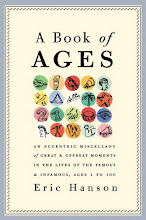
Franklin Roosevelt died suddenly on this day in 1945. He'd been dying for a long time, but nobody wanted to admit it. Losing him was too big a catastrophe to think about. A nondescript man in glasses was quickly sworn in to replace him, but nobody knew much about the guy. He was from somewhere in the Midwest. He wore a panama hat and liked to play the piano. Roosevelt had been president for so long it was hard to remember him not being president. Businessmen hated him, giving him little credit for rescuing the economy. The rich called FDR a traitor to his class. To the working man he was almost God. He was enormously self-confident and reassuring, and he was ubiquitous. People hung his picture in their homes and offices. Everybody knew his voice from the radio. Nobody had ever heard of Harry Truman. When Truman expressed his condolences to Mrs. Roosevelt she said she felt more sorry for him. He was the understudy who wakes up onstage. Everyone was looking at him, waiting for him to act, to say something so they'd know what he sounded like, wondering how quickly he would fail. He was sixty years-old. Harry Truman and Franklin Roosevelt each appear five times in A Book of Ages. Eleanor Roosevelt appears three times.

Monday, December 7, 2009
A Day That Will Live In Infamy
Leafing through A Book of Ages, you begin to realize how many lives were changed by the events of that one day. Courses changed, careers delayed or created, stories rewritten.
Churchill gained an ally and Hitler an enemy. The war in Europe had transformed Churchill from a back number into the indispensable leader, and December 7th made it likelier he would prevail, because FDR suddenly had the ability to act. FDR became a war president. Douglas MacArthur, George Patton and Dwight Eisenhower had a reason to put their boots on. (MacArthur's most recent engagement had been against World War I veterans camped on the Capitol Mall.)
Men at arms were relevant, and thousands of people who never thought of themselves as military men (or women) were put into uniform. Norman Mailer and Gore Vidal and Kurt Vonnegut would write war novels out of the experience. J. D. Salinger's story about a prep school boy named Holden Caulfield was slated to appear in the New Yorker that December. After Pearl Harbor was attacked the editors set it aside for the duration; it suddenly seemed frivolous. Salinger would see action on D-Day and meet Hemingway in Paris, and fight in the Battle of the Bulge. The war would send echoes down through his subsequent work, in characters' disrupted lives and sudden suicides in postwar living rooms.
Hemingway had seen World War I as a teenager; now he was too old to fight, but he outfitted his fishing boat to hunt submarines. In 1944 he single-handedly liberated the Ritz Bar in Paris. Edward R. Murrow became "Edward R. Murrow" reporting on a war that America was half interested in. That too changed. Walter Cronkite cut his journalistic teeth as a war correspondent, and Martha Gellhorn outran most of her male counterparts to get the big story. Her professional rivalry with Hemingway ended their marriage.
Richard Nixon's war was spent playing cards in the Pacific; he won enough from poker to win a seat in Congress. James Michener would write stories about his own experiences in the Pacific, and Rodgers and Hammerstein would make a musical from them. James Stewart enlisted and rose through the ranks to become a bomber pilot over Germany. John Wayne, a near contemporary, made the decision to stay home and play war heroes in movies. Bandleader Glenn Miller lost his life over the English Channel. On FDR's death Harry Truman was transformed from an obscure figure to the most powerful man in the world, burdened with the decision to deploy the atomic bomb. J. Robert Oppenheimer, who marshaled the hundreds of scientists to create that weapon, was dismayed by what he had created. Charles Schulz discovered first-hand how inhuman humanity could be; he would express this cynicism in a comic strip.
The most galvanizing event in American life in the 20th century was triggered by the events of this day 68 years ago on an obscure island in the Pacific. Nobody's life would be the same again.
Churchill gained an ally and Hitler an enemy. The war in Europe had transformed Churchill from a back number into the indispensable leader, and December 7th made it likelier he would prevail, because FDR suddenly had the ability to act. FDR became a war president. Douglas MacArthur, George Patton and Dwight Eisenhower had a reason to put their boots on. (MacArthur's most recent engagement had been against World War I veterans camped on the Capitol Mall.)
Men at arms were relevant, and thousands of people who never thought of themselves as military men (or women) were put into uniform. Norman Mailer and Gore Vidal and Kurt Vonnegut would write war novels out of the experience. J. D. Salinger's story about a prep school boy named Holden Caulfield was slated to appear in the New Yorker that December. After Pearl Harbor was attacked the editors set it aside for the duration; it suddenly seemed frivolous. Salinger would see action on D-Day and meet Hemingway in Paris, and fight in the Battle of the Bulge. The war would send echoes down through his subsequent work, in characters' disrupted lives and sudden suicides in postwar living rooms.
Hemingway had seen World War I as a teenager; now he was too old to fight, but he outfitted his fishing boat to hunt submarines. In 1944 he single-handedly liberated the Ritz Bar in Paris. Edward R. Murrow became "Edward R. Murrow" reporting on a war that America was half interested in. That too changed. Walter Cronkite cut his journalistic teeth as a war correspondent, and Martha Gellhorn outran most of her male counterparts to get the big story. Her professional rivalry with Hemingway ended their marriage.
Richard Nixon's war was spent playing cards in the Pacific; he won enough from poker to win a seat in Congress. James Michener would write stories about his own experiences in the Pacific, and Rodgers and Hammerstein would make a musical from them. James Stewart enlisted and rose through the ranks to become a bomber pilot over Germany. John Wayne, a near contemporary, made the decision to stay home and play war heroes in movies. Bandleader Glenn Miller lost his life over the English Channel. On FDR's death Harry Truman was transformed from an obscure figure to the most powerful man in the world, burdened with the decision to deploy the atomic bomb. J. Robert Oppenheimer, who marshaled the hundreds of scientists to create that weapon, was dismayed by what he had created. Charles Schulz discovered first-hand how inhuman humanity could be; he would express this cynicism in a comic strip.
The most galvanizing event in American life in the 20th century was triggered by the events of this day 68 years ago on an obscure island in the Pacific. Nobody's life would be the same again.
Tuesday, August 25, 2009
Freud
The last entry in Freud's diary, for August 25, 1939, reads: “War Panic.” He died a month later, in London, a few weeks after war was declared with Germany. Freud appears 13 times in A Book of Ages, seeing his mother naked, getting a couch, meeting Jung, advising Mahler about his mother fixation, collecting knick-knacks (which may or may not have been a substitution for something else,) quitting smoking.
Monday, August 3, 2009
PT 109
On August 3, 1943, John F. Kennedy’s PT boat was cut in half by a Japanese destroyer. Despite his own injuries, Lt. Kennedy managed to save the lives of most of his crew. He was 26. He'd grown up a child of privilege but dogged by poor health, not unlike the another boy president, Theodore Roosevelt. The hero of the family was always Jack's older brother, Joe Jr., who would die in combat in August, 1944. JFK appears five times in A Book of Ages.
Saturday, August 1, 2009
Julia
The new Julia Child movie opens this weekend. The shelves are full of books about her and by her, by people who remember her, and by people who want to be like her or at least want to cook like her. Her kitchen is in the Smithsonian. Her voice is in our heads whenever we cook, although it might be the voice of Dan Ackroyd. No wonder. She is our modern domestic goddess, never mind Martha Stewart and Alice Waters. (All three women have several anecdotes each in A Book of Ages.)
What surprises me is that Nora Ephron didn't think Julia had enough back story for a movie of her own, that she needed to share the screen with a young woman blogging about her recipes. What can you say? Today's TV obsession with chefs and kitchens has more to do with egos and speed and extravagance, with concept, less to do with the down-to-earth creation of good food and eating it. This young wife, played by Amy Adams, promises to cook every recipe from The Art of French Cooking in one year. Hilarity ensues. But which life are we more interested in? Who do we identify with?
That's the point, I guess. Julia works for the spy agency called the O.S.S. during WWII, travels to India and China, marries an urbane diplomat, moves to Paris, enrolls at the Cordon Bleu to learn French cooking (she didn't know how to cook at all until her mid-30s), she writes a cookbook (which her publisher turns down), then goes on public TV and becomes a star. Every life has an arc, and Julia's is interesting and full of surprises. She appears six times in A Book of Ages.
My book is about how famous lives reflect our own, so it's the private, domestic details I find most interesting. Freud and Henry Ford collecting antiques, Steve Martin collecting art, Churchill learning to paint, Jack Kerouac and Edward Elgar learning to drive, Hitler becoming a vegetarian. So I include Julia Child's first meal on her first trip to France––she was 36. The most vivid detail I discovered was the hotplate in her D.C. apartment, where she didn't cook very much or very well.
What surprises me is that Nora Ephron didn't think Julia had enough back story for a movie of her own, that she needed to share the screen with a young woman blogging about her recipes. What can you say? Today's TV obsession with chefs and kitchens has more to do with egos and speed and extravagance, with concept, less to do with the down-to-earth creation of good food and eating it. This young wife, played by Amy Adams, promises to cook every recipe from The Art of French Cooking in one year. Hilarity ensues. But which life are we more interested in? Who do we identify with?
That's the point, I guess. Julia works for the spy agency called the O.S.S. during WWII, travels to India and China, marries an urbane diplomat, moves to Paris, enrolls at the Cordon Bleu to learn French cooking (she didn't know how to cook at all until her mid-30s), she writes a cookbook (which her publisher turns down), then goes on public TV and becomes a star. Every life has an arc, and Julia's is interesting and full of surprises. She appears six times in A Book of Ages.
My book is about how famous lives reflect our own, so it's the private, domestic details I find most interesting. Freud and Henry Ford collecting antiques, Steve Martin collecting art, Churchill learning to paint, Jack Kerouac and Edward Elgar learning to drive, Hitler becoming a vegetarian. So I include Julia Child's first meal on her first trip to France––she was 36. The most vivid detail I discovered was the hotplate in her D.C. apartment, where she didn't cook very much or very well.
Subscribe to:
Posts (Atom)

 Posts
Posts


