Showing posts with label FDR. Show all posts
Showing posts with label FDR. Show all posts
Monday, April 12, 2010
Truman's Very Bad Day
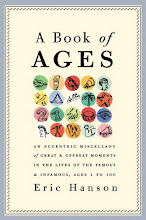
Franklin Roosevelt died suddenly on this day in 1945. He'd been dying for a long time, but nobody wanted to admit it. Losing him was too big a catastrophe to think about. A nondescript man in glasses was quickly sworn in to replace him, but nobody knew much about the guy. He was from somewhere in the Midwest. He wore a panama hat and liked to play the piano. Roosevelt had been president for so long it was hard to remember him not being president. Businessmen hated him, giving him little credit for rescuing the economy. The rich called FDR a traitor to his class. To the working man he was almost God. He was enormously self-confident and reassuring, and he was ubiquitous. People hung his picture in their homes and offices. Everybody knew his voice from the radio. Nobody had ever heard of Harry Truman. When Truman expressed his condolences to Mrs. Roosevelt she said she felt more sorry for him. He was the understudy who wakes up onstage. Everyone was looking at him, waiting for him to act, to say something so they'd know what he sounded like, wondering how quickly he would fail. He was sixty years-old. Harry Truman and Franklin Roosevelt each appear five times in A Book of Ages. Eleanor Roosevelt appears three times.

Monday, December 7, 2009
A Day That Will Live In Infamy
Leafing through A Book of Ages, you begin to realize how many lives were changed by the events of that one day. Courses changed, careers delayed or created, stories rewritten.
Churchill gained an ally and Hitler an enemy. The war in Europe had transformed Churchill from a back number into the indispensable leader, and December 7th made it likelier he would prevail, because FDR suddenly had the ability to act. FDR became a war president. Douglas MacArthur, George Patton and Dwight Eisenhower had a reason to put their boots on. (MacArthur's most recent engagement had been against World War I veterans camped on the Capitol Mall.)
Men at arms were relevant, and thousands of people who never thought of themselves as military men (or women) were put into uniform. Norman Mailer and Gore Vidal and Kurt Vonnegut would write war novels out of the experience. J. D. Salinger's story about a prep school boy named Holden Caulfield was slated to appear in the New Yorker that December. After Pearl Harbor was attacked the editors set it aside for the duration; it suddenly seemed frivolous. Salinger would see action on D-Day and meet Hemingway in Paris, and fight in the Battle of the Bulge. The war would send echoes down through his subsequent work, in characters' disrupted lives and sudden suicides in postwar living rooms.
Hemingway had seen World War I as a teenager; now he was too old to fight, but he outfitted his fishing boat to hunt submarines. In 1944 he single-handedly liberated the Ritz Bar in Paris. Edward R. Murrow became "Edward R. Murrow" reporting on a war that America was half interested in. That too changed. Walter Cronkite cut his journalistic teeth as a war correspondent, and Martha Gellhorn outran most of her male counterparts to get the big story. Her professional rivalry with Hemingway ended their marriage.
Richard Nixon's war was spent playing cards in the Pacific; he won enough from poker to win a seat in Congress. James Michener would write stories about his own experiences in the Pacific, and Rodgers and Hammerstein would make a musical from them. James Stewart enlisted and rose through the ranks to become a bomber pilot over Germany. John Wayne, a near contemporary, made the decision to stay home and play war heroes in movies. Bandleader Glenn Miller lost his life over the English Channel. On FDR's death Harry Truman was transformed from an obscure figure to the most powerful man in the world, burdened with the decision to deploy the atomic bomb. J. Robert Oppenheimer, who marshaled the hundreds of scientists to create that weapon, was dismayed by what he had created. Charles Schulz discovered first-hand how inhuman humanity could be; he would express this cynicism in a comic strip.
The most galvanizing event in American life in the 20th century was triggered by the events of this day 68 years ago on an obscure island in the Pacific. Nobody's life would be the same again.
Churchill gained an ally and Hitler an enemy. The war in Europe had transformed Churchill from a back number into the indispensable leader, and December 7th made it likelier he would prevail, because FDR suddenly had the ability to act. FDR became a war president. Douglas MacArthur, George Patton and Dwight Eisenhower had a reason to put their boots on. (MacArthur's most recent engagement had been against World War I veterans camped on the Capitol Mall.)
Men at arms were relevant, and thousands of people who never thought of themselves as military men (or women) were put into uniform. Norman Mailer and Gore Vidal and Kurt Vonnegut would write war novels out of the experience. J. D. Salinger's story about a prep school boy named Holden Caulfield was slated to appear in the New Yorker that December. After Pearl Harbor was attacked the editors set it aside for the duration; it suddenly seemed frivolous. Salinger would see action on D-Day and meet Hemingway in Paris, and fight in the Battle of the Bulge. The war would send echoes down through his subsequent work, in characters' disrupted lives and sudden suicides in postwar living rooms.
Hemingway had seen World War I as a teenager; now he was too old to fight, but he outfitted his fishing boat to hunt submarines. In 1944 he single-handedly liberated the Ritz Bar in Paris. Edward R. Murrow became "Edward R. Murrow" reporting on a war that America was half interested in. That too changed. Walter Cronkite cut his journalistic teeth as a war correspondent, and Martha Gellhorn outran most of her male counterparts to get the big story. Her professional rivalry with Hemingway ended their marriage.
Richard Nixon's war was spent playing cards in the Pacific; he won enough from poker to win a seat in Congress. James Michener would write stories about his own experiences in the Pacific, and Rodgers and Hammerstein would make a musical from them. James Stewart enlisted and rose through the ranks to become a bomber pilot over Germany. John Wayne, a near contemporary, made the decision to stay home and play war heroes in movies. Bandleader Glenn Miller lost his life over the English Channel. On FDR's death Harry Truman was transformed from an obscure figure to the most powerful man in the world, burdened with the decision to deploy the atomic bomb. J. Robert Oppenheimer, who marshaled the hundreds of scientists to create that weapon, was dismayed by what he had created. Charles Schulz discovered first-hand how inhuman humanity could be; he would express this cynicism in a comic strip.
The most galvanizing event in American life in the 20th century was triggered by the events of this day 68 years ago on an obscure island in the Pacific. Nobody's life would be the same again.
Saturday, November 7, 2009
The Revolution
On November 7th, 1917, the Bolsheviks overthrew the short-lived democratic government that had replaced the Tsarist government, putting in place a ragtag, ruthless, disorganized, incompetent, religiously committed but fanatically irreligious Soviet government that nobody thought would last three months, much less 70 years. It lasted far longer than the Thousand Year Reich of the Nazis, who had superior planning and machinery, not to mention far better art direction. In the end it was hard to distinguish the heroic statues promoting the two violently opposed ideologies. The two systems weren't that different in their design and operation. Both kleptocracies, both wonderfully efficient at appropriating property and killing their citizens.
During the Twenties capitalists didn't sleep at night, worrying about the Red Menace, expecting a Revolution to occur here any day. Communism made the Nazis seem far more attractive to people like Henry Ford and Charles Lindbergh and the Duke of Windsor, something I note in A Book of Ages. When the Crash came in 1929 Capitalism appeared doomed. For three years, the Hoover administration waited patiently for the economy to revive itself magically, but it didn't. It turned out that money hidden away by plutocrats was no more useful at stimulating an economy than money stolen by Bolsheviks.
Then on November 8th, 1932, FDR was elected president. He quickly betrayed his fellow patricians and rewrote the rulebook. His regulatory system presided over the best half century the US or any nation ever enjoyed. Until Ronald Reagan arrived and put things back to where they were before. But pure, unopposed capitalism is uninteresting on its own. It doesn't galvanize people. Twenty years after its death, Communism remains the energizing philosophy of an important part of the American political spectrum––not the left, but the right. They love it still. It's why they exist, even when it isn't there.
During the Twenties capitalists didn't sleep at night, worrying about the Red Menace, expecting a Revolution to occur here any day. Communism made the Nazis seem far more attractive to people like Henry Ford and Charles Lindbergh and the Duke of Windsor, something I note in A Book of Ages. When the Crash came in 1929 Capitalism appeared doomed. For three years, the Hoover administration waited patiently for the economy to revive itself magically, but it didn't. It turned out that money hidden away by plutocrats was no more useful at stimulating an economy than money stolen by Bolsheviks.
Then on November 8th, 1932, FDR was elected president. He quickly betrayed his fellow patricians and rewrote the rulebook. His regulatory system presided over the best half century the US or any nation ever enjoyed. Until Ronald Reagan arrived and put things back to where they were before. But pure, unopposed capitalism is uninteresting on its own. It doesn't galvanize people. Twenty years after its death, Communism remains the energizing philosophy of an important part of the American political spectrum––not the left, but the right. They love it still. It's why they exist, even when it isn't there.
Tuesday, November 3, 2009
Snapshots
Today is the birthday of the photographer Walker Evans, born in St. Louis in 1903. His father abandoned the family when he was 15, and it was around this time that Walker picked up his first camera. It was a Kodak Brownie. He took it around Toledo, everywhere he went, taking pictures of people unaware, "like a spy" is how he later described it. He spent a year in Paris, thought about being a painter, then settled in New York among the Bohemians. His first published photographs were of the Brooklyn Bridge. They appeared in a 1930 book of poems by Hart Crane. Evans was 27. Most of his photography was of people, though, people sitting on stoops, people working, people sitting on subways who didn't know they were having their picture taken. He took pictures of working men's bedrooms and empty houses.
In 1935 he embarked on a tour of the South, paid for by FDR's Farm Security Administration. Until this time poverty was a private matter, something that wasn't reported in newspapers, wasn't measured, certainly wasn't shown. The photographs appeared in a book accompanied by a text written by James Agee. Let Us Now Praise Famous Men wasn't about famous men at all, but about invisible men––poor men, women and children. Most didn't like having their pictures taken, some were too worn down to protest. Viewers took umbrage, but it brought poverty into the open where people felt obliged to do something about it. For a while anyway. After the Depression was over, poverty went back in the back of the closet. After World War II, Walker Evans spent twenty years taking pictures for Fortune magazine, and he and his wife moved to Connecticut. He appears five times in A Book of Ages.
(Other photographers appear in the book too: Henri Cartier-Bresson, Ansel Adams, Mathew Brady, Louis Lumiére, Alfred Stieglitz, Alberto Korda, Lewis Carroll, Annie Lebowitz, Abraham Zapruder among them.)
In 1935 he embarked on a tour of the South, paid for by FDR's Farm Security Administration. Until this time poverty was a private matter, something that wasn't reported in newspapers, wasn't measured, certainly wasn't shown. The photographs appeared in a book accompanied by a text written by James Agee. Let Us Now Praise Famous Men wasn't about famous men at all, but about invisible men––poor men, women and children. Most didn't like having their pictures taken, some were too worn down to protest. Viewers took umbrage, but it brought poverty into the open where people felt obliged to do something about it. For a while anyway. After the Depression was over, poverty went back in the back of the closet. After World War II, Walker Evans spent twenty years taking pictures for Fortune magazine, and he and his wife moved to Connecticut. He appears five times in A Book of Ages.
(Other photographers appear in the book too: Henri Cartier-Bresson, Ansel Adams, Mathew Brady, Louis Lumiére, Alfred Stieglitz, Alberto Korda, Lewis Carroll, Annie Lebowitz, Abraham Zapruder among them.)
Thursday, October 29, 2009
The Crash
Eighty years ago this week Wall Street laid an egg. That, at least, was the famous headline in Variety. It began on a Thursday, Black Thursday, October 24th. Thursday was followed by Black Friday. Then Black Monday, when losses set in in earnest. By the time Black Tuesday closed stocks traded on the New York Exchange had lost 17% of their value. And the slide would continue, jigging up and then dropping like a stone into 1931. The lives of millions of Americans changed dramatically. Some knew it immediately. For others the realization would dawn more slowly, like a landscape adjusting to a drought. Even those who survived relatively intact, employed and fed and housed, carried scars from the experience.
Writing this book I developed the habit of looking at people's dates. Looking at anyone's life that began in the few decades before the Crash, rich or poor, famous or not, you can think about 1929 as a pivot point. It's been said that people who purchased stocks in 1929 never saw them recover their value during their lifetime. The Crash, and then the Depression, created several generations characterized by caution and insecurity. But there were still risk takers. Some took chances on new ideas because they had nothing to lose. Ideas were their capital. And ruin was commonplace enough to make failure less stigmatizing. There was less to be cautious with. A generation that had grown up during the Depression was perhaps readier––fatalistically or realistically––to undertake a World War. Perhaps their parents made that war more likely by being afraid to confront it early and boldly.
Great lives have defining moments. FDR arrived at his inauguration prepared to deal with a paralyzing crisis because he had experienced his own in 1921, at age 39, when polio took away the use of his legs. He had the necessary courage and resolution, but it was Eleanor whose eyes and ears told him what was happening on Main Streets and back streets across America. Harry Truman had already experienced the failure of a small business. He'd been there. William F. Buckley Jr. was four years old at the time of the Crash, living in Paris with his family, and had yet to learn English. His family had experienced reverses, mostly because of the revolution in Mexico, though they were hardly paupers. Far from it. Winston Churchill, who visited Wall Street on Black Thursday, lost most of his money and began writing books for a living. He was 55 and considered a failure by most observers. Ninety year-old John D. Rockefeller lost half of his fortune but still had enough left to build Rockefeller Center, found the Museum of Modern Art, restore Colonial Williamsburg and buy enough of Jackson Hole to create a national park. Richard Nixon never forgot being poor and eating ketchup sandwiches for lunch. Lyndon Johnson saw poverty firsthand. He was a 21 year-old school teacher in 1929. F. Scott Fitzgerald's father had lost his business when Scott was a boy. Scott's fiction forever balanced on that razor's edge between euphoria and ruin. In 1929 he was spending much of his income on Zelda's care in private asylums. The Crash informed the films made by Frank Capra and John Ford, the novels written by John Steinbeck and Ralph Ellison, the poems of Langston Hughes, the film performances of Henry Fonda and James Stewart, the songs written by Yip Harburg and Johnny Mercer and sung by Billie Holiday, the music composed by Aaron Copland. References to the Great Depression appear at different points in many lives throughout A Book of Ages. It all began during one late October week eighty years ago.
Writing this book I developed the habit of looking at people's dates. Looking at anyone's life that began in the few decades before the Crash, rich or poor, famous or not, you can think about 1929 as a pivot point. It's been said that people who purchased stocks in 1929 never saw them recover their value during their lifetime. The Crash, and then the Depression, created several generations characterized by caution and insecurity. But there were still risk takers. Some took chances on new ideas because they had nothing to lose. Ideas were their capital. And ruin was commonplace enough to make failure less stigmatizing. There was less to be cautious with. A generation that had grown up during the Depression was perhaps readier––fatalistically or realistically––to undertake a World War. Perhaps their parents made that war more likely by being afraid to confront it early and boldly.
Great lives have defining moments. FDR arrived at his inauguration prepared to deal with a paralyzing crisis because he had experienced his own in 1921, at age 39, when polio took away the use of his legs. He had the necessary courage and resolution, but it was Eleanor whose eyes and ears told him what was happening on Main Streets and back streets across America. Harry Truman had already experienced the failure of a small business. He'd been there. William F. Buckley Jr. was four years old at the time of the Crash, living in Paris with his family, and had yet to learn English. His family had experienced reverses, mostly because of the revolution in Mexico, though they were hardly paupers. Far from it. Winston Churchill, who visited Wall Street on Black Thursday, lost most of his money and began writing books for a living. He was 55 and considered a failure by most observers. Ninety year-old John D. Rockefeller lost half of his fortune but still had enough left to build Rockefeller Center, found the Museum of Modern Art, restore Colonial Williamsburg and buy enough of Jackson Hole to create a national park. Richard Nixon never forgot being poor and eating ketchup sandwiches for lunch. Lyndon Johnson saw poverty firsthand. He was a 21 year-old school teacher in 1929. F. Scott Fitzgerald's father had lost his business when Scott was a boy. Scott's fiction forever balanced on that razor's edge between euphoria and ruin. In 1929 he was spending much of his income on Zelda's care in private asylums. The Crash informed the films made by Frank Capra and John Ford, the novels written by John Steinbeck and Ralph Ellison, the poems of Langston Hughes, the film performances of Henry Fonda and James Stewart, the songs written by Yip Harburg and Johnny Mercer and sung by Billie Holiday, the music composed by Aaron Copland. References to the Great Depression appear at different points in many lives throughout A Book of Ages. It all began during one late October week eighty years ago.
Friday, August 14, 2009
Social Security
On this day in 1935, Congress passed the Social Security Act. It had originated as a pension for old people without means––until 1935 most old people lived in poverty. But conservatives insisted it be a pension for rich and poor alike. The tax to cover it was capped to make sure wealthier Americans weren't paying too much in. And the provision for health care would have to wait until Medicare was passed in the 1960s. But Social Security did alleviate poverty among the elderly. It was efficient, practical, and the checks arrived like clockwork. Still do.
The first person to receive a Social Security check (number 00-000-001) was a retired secretary who'd worked for Calvin Coolidge's Vermont law firm. Her name was Ida May Fuller. She was philosophically opposed to the idea, being a lifelong Republican, but if she qualified she was determined to get the money."It wasn't that I expected anything, mind you, but I knew I'd been paying for something called Social Security and I wanted to ask the people in Rutland about it."
Her first check, which arrived in January 1940, was for $22.54. During the last three years of her working life Ida May Fuller paid a total of $24.75 into the Social Security system. By the time she died at age 100, she'd received $22,888.92 in benefits. A nice return. She never thought much of the New Deal. Ida May Fuller appears twice in A Book of Ages.
The first person to receive a Social Security check (number 00-000-001) was a retired secretary who'd worked for Calvin Coolidge's Vermont law firm. Her name was Ida May Fuller. She was philosophically opposed to the idea, being a lifelong Republican, but if she qualified she was determined to get the money."It wasn't that I expected anything, mind you, but I knew I'd been paying for something called Social Security and I wanted to ask the people in Rutland about it."
Her first check, which arrived in January 1940, was for $22.54. During the last three years of her working life Ida May Fuller paid a total of $24.75 into the Social Security system. By the time she died at age 100, she'd received $22,888.92 in benefits. A nice return. She never thought much of the New Deal. Ida May Fuller appears twice in A Book of Ages.
Wednesday, May 27, 2009
The Big Bad Wolf
On this date in 1933 Walt Disney released an animated short featuring three enterprising pigs. Homeowners, if you will. The perils of home ownership and finance were something Americans had become deeply aware of since the onset of the Depression four years earlier. The film is most famous for the song it introduced. "Who's Afraid of the Big Bad Wolf?" expressed a new, almost jaunty, hopefulness. FDR had been in office for 84 days. The wolf might still be at the door but people had a new song to whistle at him.
On the same day in Washington, the new Federal Securities Act was signed into law. One more item in the president's New Deal, it introduced the novel idea of regulating markets. There were now rules that large financial operators, banks, stockbrokers––wolves, if you will––were expected to follow. The American economy has been a less dangerous place in the generations since.
It seems funny to celebrate Walt Disney and Franklin Roosevelt in one breath, but both took the side of the little guy. Disney wasn't always the name on an enormous company. He began as an individual, a small businessman. He arrived in Hollywood penniless. He took enormous risks. He worked very hard and was incredibly talented, but he was lucky and he knew it. He was banking on the luck of his audience too. He chose a mouse for his hero, not a large animal, not a wolf. Disney appears at ages 21, 26, 35, 53 and 63 in A Book of Ages.
Franklin Roosevelt, whom capitalists sneered at and called a "traitor to his class," was born rich, but his ability to understand the fundamental importance of the little guy in the market equation probably saved American capitalism. Remember, this was a time when extremisms of one sort and another were taking over around the globe, in Japan and Germany, Italy and Russia and China. FDR understood that capitalism needs its customers to prosper too.
Roosevelt had never been poor but he understood hardship of another kind. Just as his political star was rising he contracted polio. He was 39, and he would never walk unassisted again. He went to Georgia to convalesce, and it was at Warm Springs that he met people of all classes and types who were in the same boat he was. He was no better and no worse than they were. Their courage helped him find his own. It was at Warm Springs that FDR learned the common touch that helped him––helped America––work its way through the hardest times the country had encountered since the Civil War. Franklin Roosevelt appears at ages 23, 39, 50, 53, 54 and 63 in A Book of Ages.
On the same day in Washington, the new Federal Securities Act was signed into law. One more item in the president's New Deal, it introduced the novel idea of regulating markets. There were now rules that large financial operators, banks, stockbrokers––wolves, if you will––were expected to follow. The American economy has been a less dangerous place in the generations since.
It seems funny to celebrate Walt Disney and Franklin Roosevelt in one breath, but both took the side of the little guy. Disney wasn't always the name on an enormous company. He began as an individual, a small businessman. He arrived in Hollywood penniless. He took enormous risks. He worked very hard and was incredibly talented, but he was lucky and he knew it. He was banking on the luck of his audience too. He chose a mouse for his hero, not a large animal, not a wolf. Disney appears at ages 21, 26, 35, 53 and 63 in A Book of Ages.
Franklin Roosevelt, whom capitalists sneered at and called a "traitor to his class," was born rich, but his ability to understand the fundamental importance of the little guy in the market equation probably saved American capitalism. Remember, this was a time when extremisms of one sort and another were taking over around the globe, in Japan and Germany, Italy and Russia and China. FDR understood that capitalism needs its customers to prosper too.
Roosevelt had never been poor but he understood hardship of another kind. Just as his political star was rising he contracted polio. He was 39, and he would never walk unassisted again. He went to Georgia to convalesce, and it was at Warm Springs that he met people of all classes and types who were in the same boat he was. He was no better and no worse than they were. Their courage helped him find his own. It was at Warm Springs that FDR learned the common touch that helped him––helped America––work its way through the hardest times the country had encountered since the Civil War. Franklin Roosevelt appears at ages 23, 39, 50, 53, 54 and 63 in A Book of Ages.
Sunday, May 17, 2009
Bulls and Bears
The New York Stock Exchange was formed on this day in 1792. Located on Wall Street, the stock exchange became a place of wild ups and downs, frequent panics and frauds. It remained so until 1934 when FDR formed the S.E.C. Since then the American economy has enjoyed a steady, mildly fluctuating prosperity, with no great panics and only occasional frauds, unless you consider Market Capitalism a fraud. Roosevelt put Joseph Kennedy, one of the greatest of Wall Street's buccaneers, in charge of cleaning the street up. Kennedy did a remarkable job and kept a straight face enforcing the rules that would have prevented him from acquiring his fortune. You could say FDR and Joe Kennedy were mother and father to the American middle class
Left to its own devices, life is a rollercoaster, and A Book of Ages reads like one. Mark Twain, Winston Churchill, Thomas Paine, Ulysses S. Grant, Alfred Nobel, F. Scott Fitzgerald, Mary McCarthy, Buckminster Fuller, Charles Dickens, Georg Friderich Handel, and Philo T. Farnsworth (the man who invented television) all experienced bankruptcy firsthand. Churchill lost everything in the Crash of '29 and had to write his way back to properity. John D. Rockefeller lost half of his fortune in 1929, but he still had enough left over to restore colonial Williamsburg, create Grand Teton National Park, build Rockefeller Center and found the Museum of Modern Art. Being rich insulates you from life's troubles. John Steinbeck wrote about the other 99% of us in The Grapes of Wrath, which I also mention. I sometimes think a book is a better monument.
“The world is the house of the strong. I shall not know until the end what I have lost or won in this place, in this vast gambling den where I have spent more than sixty years, dicebox in hand, shaking the dice.” Denis Diderot, Elements of Physiology (1774-1780)
Left to its own devices, life is a rollercoaster, and A Book of Ages reads like one. Mark Twain, Winston Churchill, Thomas Paine, Ulysses S. Grant, Alfred Nobel, F. Scott Fitzgerald, Mary McCarthy, Buckminster Fuller, Charles Dickens, Georg Friderich Handel, and Philo T. Farnsworth (the man who invented television) all experienced bankruptcy firsthand. Churchill lost everything in the Crash of '29 and had to write his way back to properity. John D. Rockefeller lost half of his fortune in 1929, but he still had enough left over to restore colonial Williamsburg, create Grand Teton National Park, build Rockefeller Center and found the Museum of Modern Art. Being rich insulates you from life's troubles. John Steinbeck wrote about the other 99% of us in The Grapes of Wrath, which I also mention. I sometimes think a book is a better monument.
“The world is the house of the strong. I shall not know until the end what I have lost or won in this place, in this vast gambling den where I have spent more than sixty years, dicebox in hand, shaking the dice.” Denis Diderot, Elements of Physiology (1774-1780)
Wednesday, April 15, 2009
Da Vinci & Lincoln
Today is the birthday of Leonardo Da Vinci, who was born in 1452 in the town of Vinci, hence the name. He was the quintessential Renaissance Man, doing a multitude of things and all of them well. At age 50 he was employed by the Borgias as a military engineer––a defense contractor, if you will; a year later he painted his serene masterpiece la Gioconda, better known today as the Mona Lisa. In difficult times it's good to be versatile. Da Vinci appears on pages 31, 190, 195 and 240 in A Book of Ages.
Abraham Lincoln was felled by an assassin's bullet on April 15, 1865. It's a story repeated often in history: the hero who isn't alive to enjoy the fruits of victory. Martin Luther King Jr., FDR, Bobby Kennedy, Admiral Horatio Nelson, Moses.
The eerie coincidences between the deaths of Lincoln and JFK have become folklore: Lincoln's assassin did the deed in a theater and was captured in a warehouse; Kennedy's assassin fired from a warehouse and was captured in a theater; Lincoln had a secretary named Kennedy, Kennedy had a secretary named Lincoln; both were succeeded by V.P.s named Johnson; etc. Famous stories are full of ironic details.
Writing about Lincoln's death in A Book of Ages I chose to describe the contents of his pockets, which, ironically enough, included a Confederate five dollar bill. Lincoln stories are told on pages 40, 49, 73, 135, 162-3, 189, 195, 199 and 210.
Abraham Lincoln was felled by an assassin's bullet on April 15, 1865. It's a story repeated often in history: the hero who isn't alive to enjoy the fruits of victory. Martin Luther King Jr., FDR, Bobby Kennedy, Admiral Horatio Nelson, Moses.
The eerie coincidences between the deaths of Lincoln and JFK have become folklore: Lincoln's assassin did the deed in a theater and was captured in a warehouse; Kennedy's assassin fired from a warehouse and was captured in a theater; Lincoln had a secretary named Kennedy, Kennedy had a secretary named Lincoln; both were succeeded by V.P.s named Johnson; etc. Famous stories are full of ironic details.
Writing about Lincoln's death in A Book of Ages I chose to describe the contents of his pockets, which, ironically enough, included a Confederate five dollar bill. Lincoln stories are told on pages 40, 49, 73, 135, 162-3, 189, 195, 199 and 210.
Sunday, April 12, 2009
Jesus of Nazareth and Harry Truman of Missouri
Harry Truman was vice president for 82 days when FDR died on April 12, 1945, making Truman president. Most of America had never heard of the former haberdasher from Missouri. The vice presidency was an obscure post in those days, not worth the proverbial bucket of warm spit. But Truman was no shrinking violet. He'd chaired a senate committee investigating corruption in the defense industry, and had done this while the war was going on, something modern-day patriots would probably call unpatriotic. Truman is the only president who ever dropped the big one. He also uttered the famous line "the buck stops here." Truman anecdotes appear on pages 141, 223, 233, 265 and 281 in A Book of Ages.
Jesus is a difficult figure to pin down in terms of age. He was a minor figure when he died and entirely obscure when he was born, so his dates are rough estimates and vary significantly. Rather than going with the religious accounts I chose the dates arrived at by historians, dates attached to contemporaneous events, but the stories are the ones we know from the New Testament. His remarkable bible knowledge at a young age, the anti-establishment, anti-authoritarian, explicitly liberal sermons, the warnings about what's in store for rich people after they die, the betrayal and his followers' memoirs. Jesus wasn't a shrinking violet either, which makes for good stories. He appears on pages 1, 26,120 and 126 in A Book of Ages.
Jesus is a difficult figure to pin down in terms of age. He was a minor figure when he died and entirely obscure when he was born, so his dates are rough estimates and vary significantly. Rather than going with the religious accounts I chose the dates arrived at by historians, dates attached to contemporaneous events, but the stories are the ones we know from the New Testament. His remarkable bible knowledge at a young age, the anti-establishment, anti-authoritarian, explicitly liberal sermons, the warnings about what's in store for rich people after they die, the betrayal and his followers' memoirs. Jesus wasn't a shrinking violet either, which makes for good stories. He appears on pages 1, 26,120 and 126 in A Book of Ages.
Subscribe to:
Posts (Atom)

 Posts
Posts


